How to Prepare for an Acting Audition
Follow a beginner-friendly audition preparation timeline covering instructions, materials, rehearsal planning, logistics, and final readiness checks before audition day.
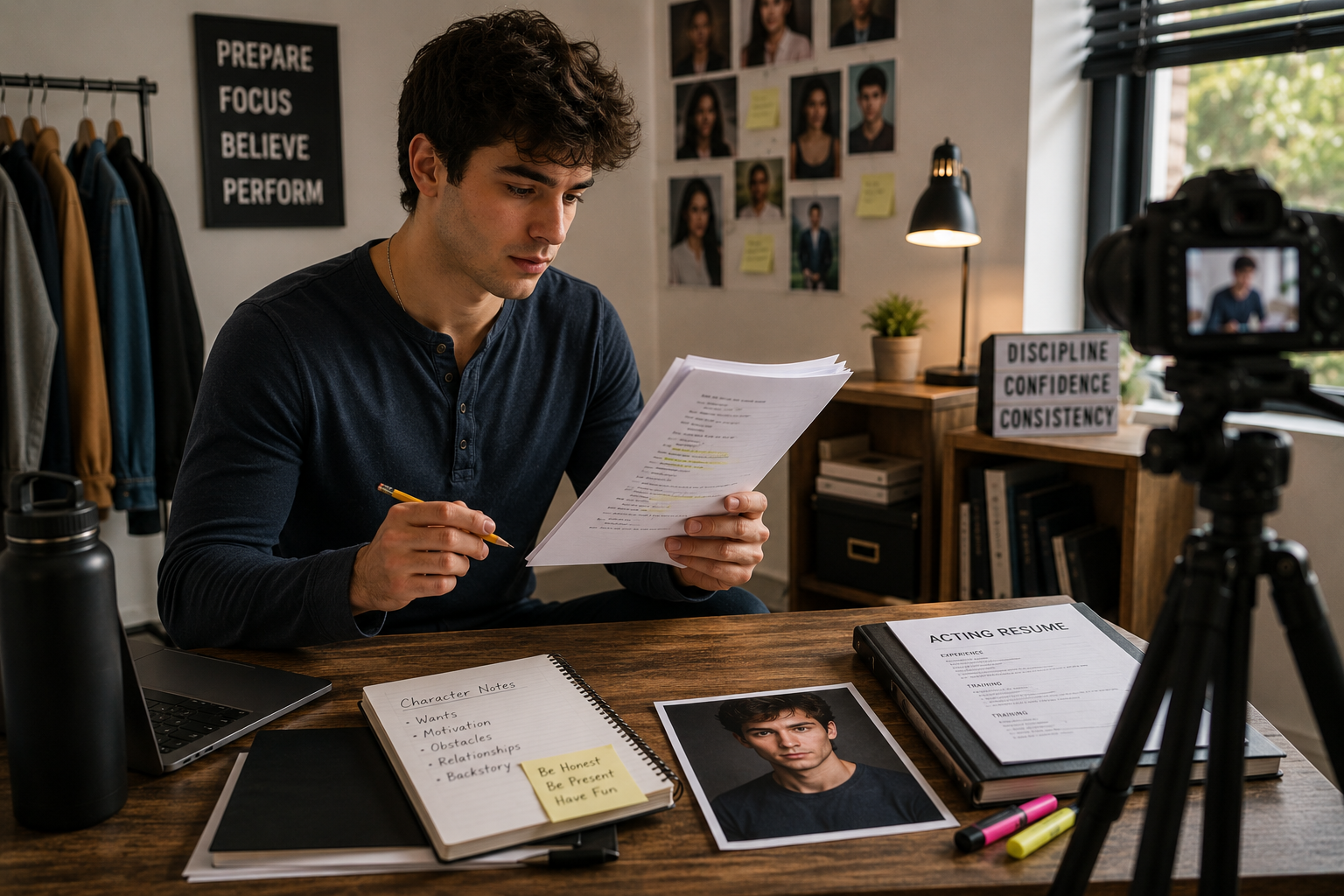
Preparing for an acting audition is not about trying to predict every casting decision.
It is about organizing the parts of the process you can control.
When learning how to prepare for an acting audition, begin with the instructions, create a realistic rehearsal plan, organize the required materials, and confirm the practical details before audition day.
A clear preparation process can help you arrive or submit on time, understand what the project is requesting, and focus more fully on your performance.
You do not need to master every acting technique or create a perfect interpretation before you audition.
Your goal is to prepare a thoughtful version of the material while remaining flexible enough to respond to new direction.
Begin With the Audition Instructions
Before rehearsing, read every instruction supplied with the audition.
The casting notice, invitation, or submission message may contain important details about:
- The role
- The production
- The audition format
- The deadline or appointment time
- The location or virtual meeting link
- The material you should prepare
- The requested slate
- The number of takes allowed
- The preferred framing
- Wardrobe or prop requests
- File names and upload instructions
Do not assume that every audition follows the same process.
One production may request a full-body slate, while another may want only your name. One self-tape may allow two takes, while another may ask for a single continuous recording.
If the instructions are spread across several messages or attachments, collect them in one place so you can review them easily.
Before continuing, make sure you understand:
- What you are expected to perform
- When and where the audition will happen
- What you need to bring or submit
- How the finished audition should be delivered
When something important is genuinely unclear, review the original notice before contacting the appropriate production representative with a brief and professional question.
Create a Simple Preparation Timeline
Working backward from the audition date or submission deadline can make the process feel more manageable.
Your preparation timeline may include:
- Reading the instructions
- Reviewing the role and scene
- Scheduling rehearsal time
- Practicing with a reader
- Organizing required materials
- Confirming transportation or recording arrangements
- Completing a final technical or logistical check
The amount of preparation time available will vary.
Some auditions provide several days, while others may arrive with a much shorter turnaround. Focus on the most important requirements instead of trying to complete an unrealistic amount of work.
A simple timeline might look like this:
- When you receive the audition: Read the instructions and confirm the deadline.
- During your first review: Read the material and identify what is happening in the scene.
- During rehearsal: Practice the material aloud and make a clear initial choice.
- Before audition day: Organize your materials and confirm the practical details.
- Before performing or submitting: Complete a calm final review.
Avoid leaving every decision until the last minute.
At the same time, do not rehearse continuously until the material begins to feel mechanical or exhausted.
A useful preparation plan gives you structure while still leaving room for rest and flexibility.
Understand What the Material Requires
Read the complete material before beginning to memorize or perform individual lines.
Look for the basic circumstances of the scene:
- Who are you speaking to?
- Where is the scene taking place?
- What has just happened?
- What does your character want?
- What changes during the scene?
- Are there any required actions?
You do not need to create an elaborate history for every detail.
Begin with the information provided in the script, casting notice, and character description. Use that information to make a clear and believable starting choice.
Also note any words, names, or phrases that may require pronunciation research.
For commercial copy, identify the main message and determine whether you are speaking to another character or directly to the viewer.
For film and television sides, pay attention to the relationship, the circumstances, and what changes between the beginning and end of the scene.
Detailed script-analysis techniques belong to a deeper stage of preparation. For a beginner audition, concentrate first on understanding what is happening and what the material asks you to communicate.
Rehearse for Clarity and Flexibility
Once you understand the material, begin practicing it aloud.
Reading silently can help you become familiar with the words, but speaking the material reveals its rhythm, pacing, and emotional changes.
During rehearsal:
- Practice with a reader when the scene includes another character.
- Listen to the other lines instead of waiting for your turn to speak.
- Keep physical movement simple and purposeful.
- Make one clear performance choice.
- Notice where the scene changes.
- Confirm that the performance fits the requested time limit.
If you are preparing an in-person audition, practice in a space that allows you to stand, move naturally, and maintain an appropriate eyeline.
If you are preparing a self-tape, test how the performance appears within the requested framing.
You do not need to create several completely different performances before the audition.
Prepare one grounded version that you understand, then remain open to adjustments from the casting team or director.
Memorization can help you connect more naturally with the scene, but the required level of memorization may depend on the project and the amount of preparation time provided.
Aim to know the material well enough that you can stay present rather than concentrating only on remembering the next word.
Organize the Required Materials
Gather your audition materials before the day of the appointment or submission.
Depending on the audition, you may need:
- Audition sides
- A headshot and Resume, when requested
- Identification
- A pencil
- Water
- Directions or parking information
- Contact information for the audition
- A simple wardrobe option
- Any specifically requested prop
- Self-tape recording equipment
Bring or prepare only what is relevant to the audition.
You generally do not need to carry every headshot, script, costume, or acting document you own.
For a self-tape, organize your recording space before performing. Check that your phone or camera is charged, storage space is available, and the required files can be uploaded before the deadline.
For an in-person audition, place the essential items together so they are easy to find when you leave.
Organizing these materials early reduces avoidable distractions and allows more of your attention to remain on the performance.
Plan the Practical Details Early
Performance preparation is only one part of getting ready for an audition.
Practical details can affect whether you arrive calmly, meet the deadline, and follow the production's instructions correctly.
For an in-person audition, confirm:
- The exact address
- The appointment time
- Transportation or parking options
- The expected arrival window
- The check-in process
- The name and contact information provided
- Any building access or identification requirements
- What materials you have been asked to bring
Plan to arrive with enough time to check in without creating unnecessary pressure.
Arriving extremely early may not always be helpful, especially when waiting areas are limited. Follow any arrival guidance provided by the casting office.
For a self-tape audition, confirm:
- The recording deadline
- The requested framing
- The slate instructions
- The number of takes allowed
- Whether a reader is required
- The preferred file format
- The file-naming instructions
- The upload method
Before recording, make sure your device is charged, storage space is available, and your internet connection can support the upload.
You do not need to build an elaborate recording studio for every self-tape.
A clean background, clear audio, appropriate framing, and careful attention to the instructions are more important than unnecessary equipment.
Complete a Final Readiness Check
Before the audition, complete one calm review of the essential details.
Ask yourself:
- Do I understand what I am performing?
- Have I reviewed every instruction?
- Are my materials organized?
- Is my wardrobe ready?
- Do I know where I am going or how I am submitting?
- Have I confirmed the time or deadline?
- Is my phone or recording device charged?
- Have I allowed enough time for unexpected delays?
Your final review should help you feel organized—not encourage another long rehearsal session.
Avoid making major changes immediately before the audition unless you discover that you misunderstood an important instruction.
The night before, focus on practical preparation, a light review of the material, and reasonable rest.
On audition day, give yourself enough time to get ready without rushing.
You may still feel nervous, and that is normal. Preparation does not remove every uncertain feeling. It gives you a reliable process to return to when the experience feels unfamiliar.
Common Audition Preparation Mistakes
Rehearsing Before Reading the Instructions
Beginning the scene immediately can feel productive, but it may lead you to prepare the wrong material, framing, slate, or number of takes.
Read the complete instructions first.
Trying to Prepare a Perfect Performance
An audition is not usually the final version of the role.
Prepare a clear interpretation while remaining flexible enough to respond to direction or new information.
Rehearsing Until the Material Feels Mechanical
Repetition can improve familiarity, but too much repetition may reduce active listening and spontaneity.
Use focused rehearsal sessions and take breaks when the work begins to feel forced.
Leaving Logistics Until the Last Minute
Transportation problems, missing files, low device storage, or misunderstood deadlines can create avoidable stress.
Confirm the practical details early enough to solve problems calmly.
Trying to Control the Casting Decision
Preparation can strengthen the work you present, but it cannot guarantee a booking.
Casting decisions may depend on many factors outside your control.
Focus on following the instructions, understanding the material, and delivering a prepared performance.
Frequently Asked Questions
How Long Should I Prepare for an Acting Audition?
The amount of preparation time depends on the material, the deadline, and your experience.
Some auditions provide several days, while others may require a faster turnaround.
Use the time available to understand the instructions, review the scene, rehearse aloud, and organize the practical details.
Do I Need to Memorize Every Audition?
Memorization expectations vary by project.
When possible, know the material well enough to remain connected to the scene rather than concentrating only on the next line.
If complete memorization is not realistic, become as familiar with the material as the available preparation time allows and follow any instructions about holding the sides.
How Many Times Should I Rehearse?
There is no universal number.
Rehearse until you understand the material, can communicate the scene clearly, and feel comfortable enough to listen and respond.
Stop when additional repetition is no longer improving the work.
What Should I Do if I Receive a Last-Minute Audition?
Begin with the essential requirements.
Confirm the deadline, read the instructions, understand the basic circumstances, make one clear choice, and organize the required materials.
A focused preparation process is more useful than trying to complete every possible exercise in limited time.
Your Next Steps
Use this preparation sequence for your next audition:
- Read every instruction.
- Confirm the time, location, or deadline.
- Review the role and material.
- Create a simple rehearsal schedule.
- Practice the scene aloud.
- Organize the required materials.
- Confirm your wardrobe and practical arrangements.
- Complete one final readiness check.
- Arrive or submit on time.
- Remain open to direction.
After the audition, reflect briefly on the parts of your preparation process that helped.
Consider whether you:
- Gave yourself enough rehearsal time
- Understood the instructions
- Organized your materials early
- Managed the practical details effectively
- Remained flexible during the performance
Use what you learn to improve your process for the next opportunity.
Audition preparation becomes more manageable when you develop a repeatable routine instead of starting from the beginning every time.