What to Wear to an Acting Audition
Not sure what to wear to an acting audition? Learn how to choose the right outfit, avoid common wardrobe mistakes, and make a professional first impression.
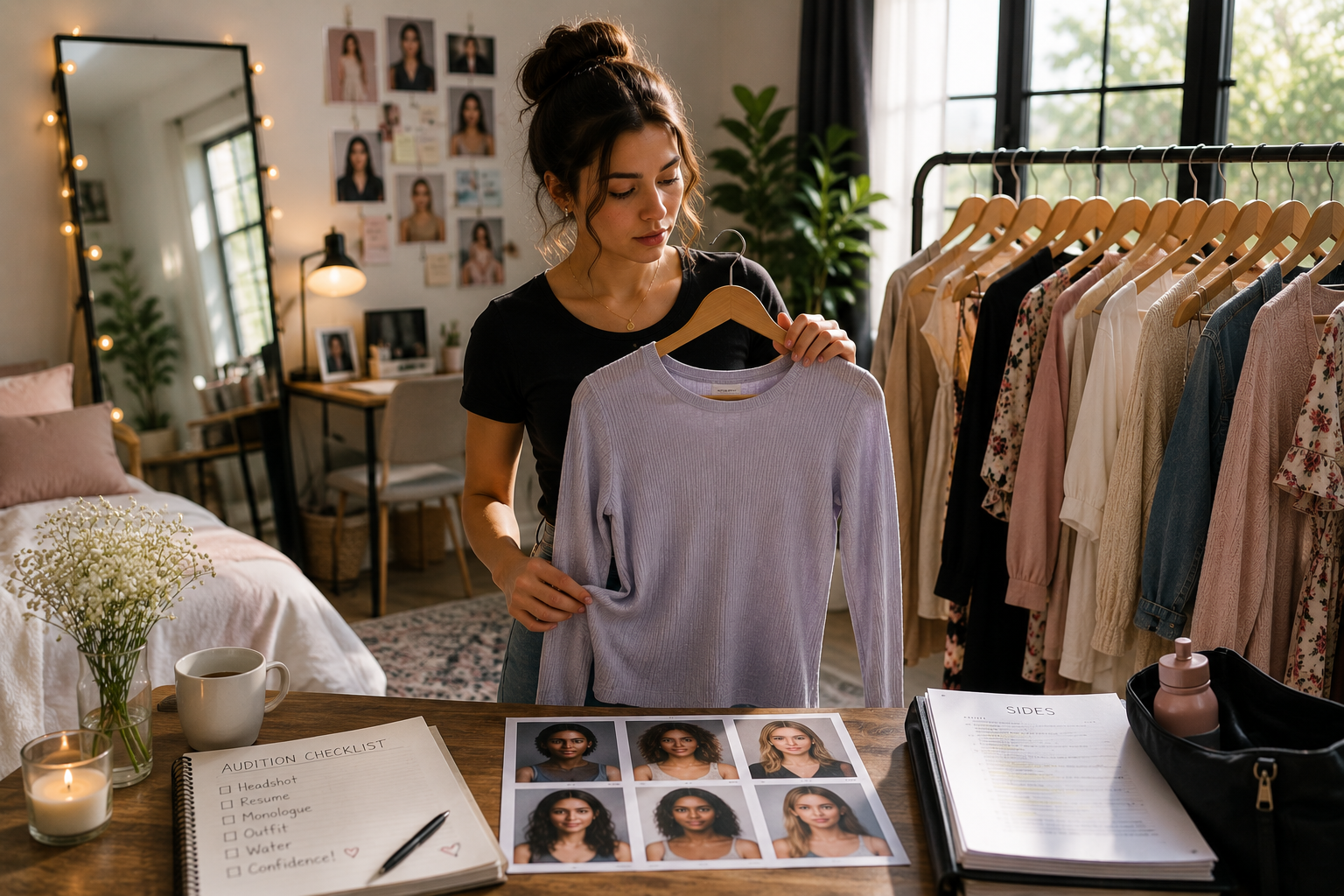
What you wear to an acting audition can help create a strong first impression, but it should never distract from your performance.
Many beginners worry about finding the "perfect" outfit or assume they need to dress exactly like the character they're auditioning for.
In reality, casting directors usually prefer simple, clean clothing that helps them imagine you in the role without becoming a costume.
The goal is to look professional, feel comfortable, and allow your performance to take center stage.
In this guide, you'll learn how to choose the right audition outfit, what clothing to avoid, and simple wardrobe tips that can help you walk into your next audition with confidence.
Why Your Audition Outfit Matters
Your clothing is one of the first things a casting director notices.
That doesn't mean expensive clothes or designer brands will improve your chances.
Instead, your outfit should help create a polished, professional appearance while allowing the casting team to focus on your acting.
The best audition outfits are usually:
- Clean
- Comfortable
- Well-fitted
- Simple
- Appropriate for the role
If you're constantly adjusting your clothing or feeling uncomfortable, it becomes harder to stay focused on your performance.
Choosing the right outfit helps you feel confident before you even walk into the audition room.
Dress for the Character, Not as the Character
One of the biggest misconceptions beginners have is believing they should arrive in full costume.
This usually isn't necessary.
Casting directors want to imagine you in the role, not see a complete costume before you've even performed.
Instead, wear clothing that suggests the character.
For example:
- A business casual outfit for an office professional
- Athletic clothing for a fitness instructor
- Casual everyday clothing for a college student
- Simple neutral clothing for dramatic roles
Small wardrobe choices can hint at the character without becoming distracting.
Your acting should always be the focus.
Think "Inspired By," Not "Dressed As"
Imagine you're auditioning for the role of a police officer.
Wearing a full police uniform would probably feel excessive unless specifically requested.
Instead, choose clean, structured clothing in darker colors that gives a similar impression without looking like a costume.
The same idea applies to almost every role.
Subtle choices are usually more effective than dramatic ones.
Choose Colors That Keep the Focus on You
Color can influence how you appear on camera.
Neutral and solid colors are often the safest choice because they help keep attention on your face.
Popular options include:
- Navy
- Gray
- Black
- White
- Olive
- Burgundy
- Earth tones
These colors usually photograph well and create a clean, professional appearance.
Avoid Busy Patterns
Large logos, bright graphics, glitter, or bold patterns can pull attention away from your performance.
Instead, choose clothing with:
- Solid colors
- Simple textures
- Minimal branding
If the casting director remembers your shirt more than your performance, your outfit may have been too distracting.
Dress Comfortably
Comfort matters more than many beginners realize.
If your clothing feels tight, restrictive, or uncomfortable, it may affect your posture, movement, and confidence.
Choose clothing that allows you to:
- Walk naturally
- Sit comfortably
- Move your arms freely
- Express emotion without restriction
When you're comfortable, it's easier to stay present in the scene.
Shoes Matter Too
Your footwear should match the overall style of your outfit while remaining practical.
In many auditions, your shoes may not even be visible.
However, wearing clean, appropriate shoes helps complete your professional appearance.
Avoid footwear that's difficult to walk in or makes unnecessary noise.
The goal is to feel comfortable from the moment you arrive until your audition is complete.
Hair, Makeup, and Grooming
Your overall appearance should look clean, natural, and appropriate for the role.
The goal isn't to create a dramatic new look.
Instead, present yourself in a way that allows the casting team to clearly see you.
Keep Hair Simple
Choose a hairstyle that looks neat and stays out of your face.
If your hair constantly needs adjusting, it can become distracting during your performance.
For longer hair, consider styles that frame your face without covering your expressions.
If you're auditioning for a specific character, style your hair in a way that supports the role without becoming overly theatrical.
Keep Makeup Natural
Unless the role specifically calls for a bold look, natural makeup is usually the best choice.
Casting directors want to see your natural features.
Heavy makeup can sometimes make it harder to imagine you in different roles.
A simple, polished appearance often works best for both in-person and self-tape auditions.
Pay Attention to Grooming
Small details can contribute to a professional appearance.
Before your audition, make sure:
- Your clothing is clean and wrinkle-free.
- Your shoes are clean.
- Your nails are neat.
- Facial hair, if you have it, is well groomed.
- Hair is tidy and intentional.
You don't need to look glamorous.
You simply want to appear prepared and professional.
Keep Accessories to a Minimum
Accessories should complement your appearance, not become the center of attention.
Avoid items that may distract during your performance, such as:
- Large statement jewelry
- Noisy bracelets
- Oversized hats
- Reflective sunglasses
- Flashy watches
Simple accessories are usually enough.
If an accessory supports the character in a subtle way, it may be appropriate. Otherwise, less is often more.
What to Wear for a Self-Tape Audition
Many auditions now happen from home.
The same wardrobe principles apply, but there are a few additional things to consider.
Choose clothing that contrasts with your background.
For example, if you're recording against a light gray backdrop, avoid wearing a similar color that blends into the background.
Also pay attention to your lighting.
Some colors appear differently on camera than they do in person, so it's a good idea to record a short test video before submitting your audition.
Common Wardrobe Mistakes to Avoid
Even experienced actors occasionally make wardrobe mistakes.
Fortunately, they're easy to avoid once you know what to look for.
Wearing a Costume
You don't need to arrive dressed as the character unless the casting notice specifically requests it.
Instead, choose clothing that suggests the role while keeping the focus on your performance.
Choosing Style Over Comfort
An outfit may look great, but if it restricts your movement or makes you feel self-conscious, it can affect your confidence.
Always choose clothing that allows you to move and perform naturally.
Wearing Distracting Clothing
Bright patterns, large logos, sequins, and flashy designs can pull attention away from your performance.
Simple clothing almost always works better.
Ignoring the Casting Instructions
Some productions provide specific wardrobe requests.
Always read the casting notice carefully and follow any instructions provided.
If the casting team asks for a particular style of clothing, make every effort to accommodate the request.
Dressing Too Formally or Too Casually
Your clothing should fit the role you're auditioning for.
A formal business suit may not make sense for a casual teenager role, just as athletic clothing may not fit a corporate executive.
Aim for clothing that feels believable for the character without becoming a costume.
Frequently Asked Questions
Should I wear black to an acting audition?
Black is often a safe choice because it looks clean and professional.
However, other solid colors such as navy, gray, olive, burgundy, or earth tones also work well.
The most important thing is choosing clothing that complements you without becoming distracting.
Can I wear jeans to an audition?
Yes, if they're appropriate for the character and look neat.
Clean, well-fitting jeans paired with a simple top are often suitable for many casual roles.
Should I wear makeup to an audition?
Natural makeup is generally recommended unless the casting notice requests a specific look.
The goal is to present yourself professionally while allowing your natural features to be seen.
Do shoes matter if they won't be seen?
Yes.
Comfortable, appropriate footwear helps complete your overall appearance and allows you to move confidently during your audition.
Your Next Steps
Choosing the right audition outfit doesn't have to be complicated.
Remember these simple principles:
- Dress for the role without wearing a costume.
- Choose clean, comfortable clothing.
- Wear solid, neutral colors when possible.
- Keep accessories simple.
- Follow any wardrobe instructions in the casting notice.
Your wardrobe should support your performance, not compete with it.
The more comfortable and confident you feel, the easier it becomes to focus on what matters most: bringing the character to life.