How to Calm Audition Nerves Before You Perform
Feeling nervous before an audition? Discover practical ways to stay calm, build confidence, and perform your best when it matters most.
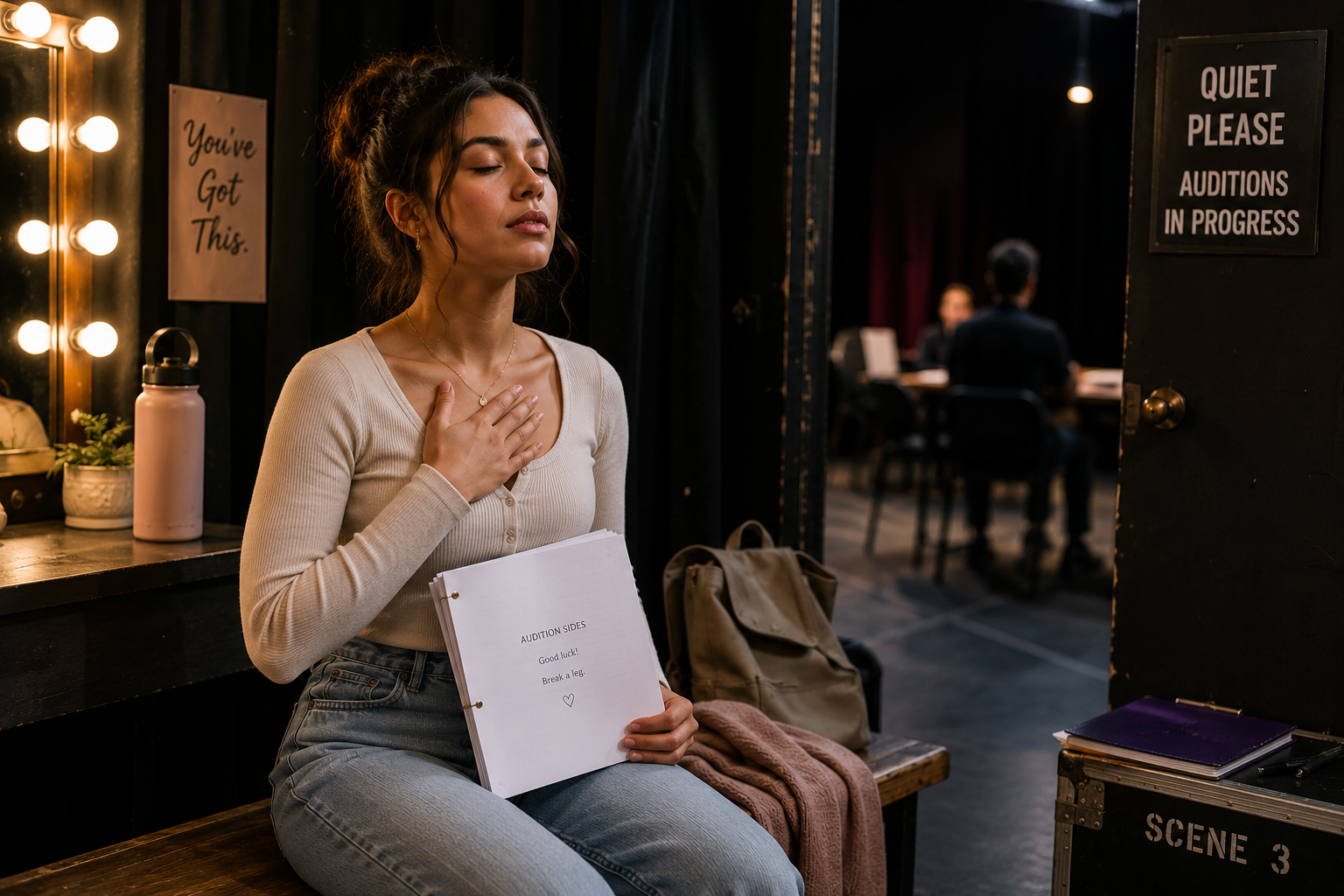
Feeling nervous before an audition is completely normal.
Whether it's your first audition or your fiftieth, it's common to experience butterflies, sweaty hands, or racing thoughts before stepping into the room.
Many beginners assume experienced actors never get nervous.
The truth is that even seasoned professionals still experience audition nerves.
The difference is that they've learned how to manage those feelings instead of letting fear take control.
The goal isn't to eliminate nervousness completely.
The goal is to stay calm enough to focus on telling the story.
In this guide, you'll learn practical strategies that can help reduce audition anxiety, improve your confidence, and allow your preparation to shine through.
Why Everyone Gets Nervous
Your body reacts to auditions because they feel important.
When you're excited or uncertain, your brain releases adrenaline.
That adrenaline can cause:
- A faster heartbeat
- Sweaty palms
- Shaky hands
- Dry mouth
- Racing thoughts
These physical reactions don't mean you're unprepared.
They simply mean your body recognizes that you're about to do something meaningful.
Instead of fighting these feelings, learn to work with them.
Many actors use that energy to create more engaging performances.
Nervous Doesn't Mean You're Not Ready
One of the biggest misconceptions about acting is believing confidence means never feeling nervous.
Confidence isn't the absence of fear.
Confidence is trusting your preparation even when you feel nervous.
If you've practiced your scene, learned your lines, and prepared thoughtfully, you've already done the work.
Now it's time to let yourself perform.
Preparation Is the Best Confidence Builder
There's no shortcut that replaces preparation.
The more familiar you are with your material, the easier it becomes to stay focused during the audition.
Before audition day, make time to:
- Learn your lines.
- Understand the character.
- Practice your scene out loud.
- Record yourself.
- Review the casting notice.
- Prepare everything you'll need.
When you know you've done everything you reasonably can, it's easier to walk into the audition with confidence.
Focus on What You Can Control
Many actors spend energy worrying about things they can't control.
For example:
- How many people are auditioning.
- Who the casting director chooses.
- Whether another actor has more experience.
Instead, concentrate on what you can control:
- Your preparation.
- Your attitude.
- Your professionalism.
- Your performance.
Shifting your attention to these areas helps reduce unnecessary stress.
Practice Deep Breathing
One of the fastest ways to calm your body before an audition is through slow, controlled breathing.
Try this simple exercise:
- Breathe in slowly through your nose for four seconds.
- Hold your breath for four seconds.
- Exhale gently through your mouth for four seconds.
- Repeat several times.
Deep breathing can slow your heart rate and help you feel more grounded before you enter the audition room.
Visualize a Positive Performance
Visualization is a technique used by many performers and athletes.
Before your audition, spend a few moments imagining yourself:
- Walking confidently into the room.
- Greeting the casting team.
- Delivering your performance naturally.
- Leaving the audition feeling proud of your work.
Visualization doesn't guarantee success.
However, it helps replace fearful thoughts with positive expectations.
Remember That Casting Directors Want You to Succeed
Many beginners imagine casting directors looking for mistakes.
In reality, casting teams are hoping each actor is the right fit for the role.
They aren't trying to make auditions stressful.
They want to discover talented performers who bring the character to life.
Keeping this perspective can make the audition feel more like a collaboration than a test.
Create a Pre-Audition Routine
One of the best ways to reduce audition anxiety is by creating a simple routine that you follow before every audition.
A routine helps your mind recognize that it's time to focus.
It also gives you something familiar to rely on, even when you're feeling nervous.
Your routine doesn't have to be complicated.
It might include:
- Arriving early.
- Reviewing your first few lines.
- Taking a few deep breaths.
- Drinking some water.
- Stretching your shoulders and neck.
- Visualizing a successful performance.
The more consistently you follow your routine, the more comfortable auditions begin to feel.
Give Yourself Plenty of Time
Running late can make your nerves even worse.
Whenever possible, plan to arrive 10 to 15 minutes early.
That extra time allows you to:
- Find the audition room.
- Check in without rushing.
- Review your notes.
- Relax before your name is called.
Starting your audition calmly often leads to a more confident performance.
Stay Present During Your Performance
Once your audition begins, try not to think about what the casting director is writing down or whether you're delivering the "perfect" performance.
Instead, focus on the scene in front of you.
Listen carefully to your reader.
Respond naturally.
Stay connected to your character's objective.
The more present you are, the less room your mind has for anxious thoughts.
What If Your Mind Goes Blank?
Forgetting a line can feel overwhelming, especially during your first few auditions.
If it happens:
- Pause for a moment.
- Take a quiet breath.
- Think about your character's objective.
- Continue the scene if you can.
Avoid apologizing repeatedly or criticizing yourself during the audition.
Casting directors understand that everyone makes mistakes.
Often, they'll remember how professionally you recovered rather than the mistake itself.
Common Mistakes That Increase Anxiety
Sometimes nervousness becomes worse because of habits that are easy to avoid.
Trying to Be Perfect
Many beginners believe they need to give a flawless performance.
In reality, casting directors are looking for believable performances, not perfection.
Allow yourself to be human.
Comparing Yourself to Other Actors
It's easy to feel intimidated when another actor seems confident or experienced.
Remember that everyone brings something different to the role.
Casting decisions aren't based on who looks the most confident in the waiting room.
Focus on telling your version of the story.
Reading Online Forums Before Your Audition
Spending hours reading other actors' experiences or worrying about rumors can increase anxiety.
Instead, use that time to review your material or relax.
Protect your mindset before audition day.
Skipping Meals or Water
Your body performs better when it's properly fueled.
Eat a light meal, stay hydrated, and avoid relying only on caffeine before your audition.
Small habits like these can help you stay focused and energized.
Confidence Comes From Experience
Every audition teaches you something.
Some auditions will go exactly as planned.
Others may not.
Both experiences help you grow.
The actors who become comfortable auditioning aren't necessarily fearless.
They've simply learned that one audition doesn't define their career.
Each opportunity is another chance to improve.
With time, the audition process becomes more familiar, and confidence grows naturally.
Frequently Asked Questions
Is it normal to feel nervous before every audition?
Yes.
Many professional actors still experience audition nerves.
The goal isn't to eliminate those feelings but to manage them so they don't interfere with your performance.
Can breathing exercises really help?
Yes.
Slow, controlled breathing helps calm your nervous system and can reduce physical symptoms such as a racing heart or shallow breathing.
Many performers use breathing exercises before auditions and live performances.
What if I completely forget my lines?
Stay calm and recover as naturally as possible.
Casting directors understand that mistakes happen.
How you respond often says more about your professionalism than the mistake itself.
Will confidence come with more auditions?
For most actors, yes.
The more auditions you attend, the more familiar the process becomes.
Experience is one of the most effective ways to build lasting confidence.
Your Next Steps
Feeling nervous before an audition doesn't mean you're not ready.
It usually means you care about doing your best.
As you continue preparing for future auditions:
- Practice consistently.
- Build a simple pre-audition routine.
- Focus on what you can control.
- Trust your preparation.
- Remember that every audition is valuable experience.
Confidence isn't something you wait for.
It's something you build, one audition at a time.