How to Memorize Audition Lines Faster
Need to learn audition lines quickly? Discover simple memorization techniques that help actors remember dialogue with confidence.
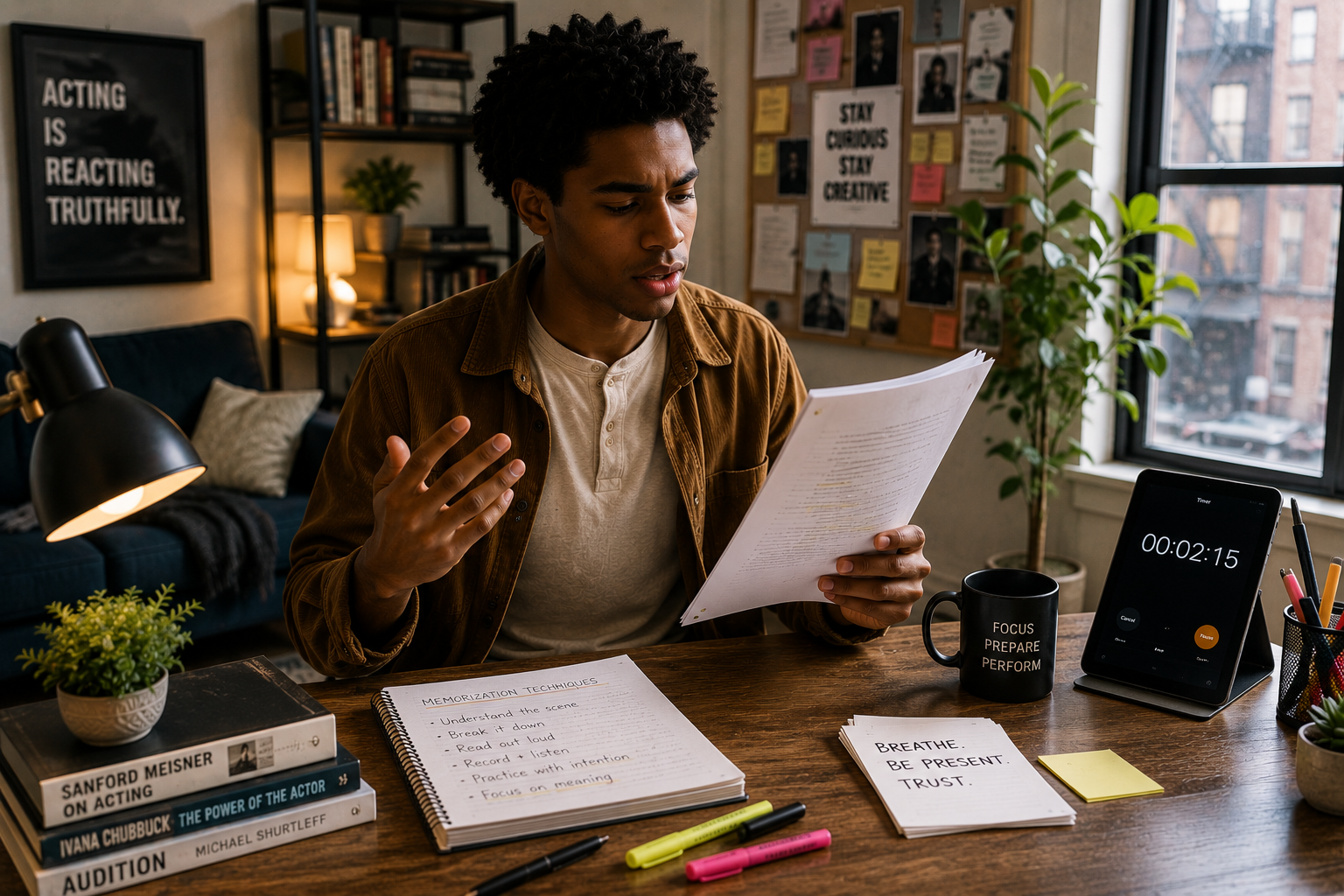
Receiving an audition is exciting.
Then reality sets in.
You open the script, glance at the number of pages, and wonder how you're going to remember all those lines before audition day.
The good news is that memorizing dialogue is a skill.
Like acting itself, it becomes easier with practice and the right techniques.
Many beginners believe successful actors simply have incredible memories.
In reality, professional actors rely on proven methods that help them learn dialogue efficiently while staying connected to the emotions of the scene.
In this guide, you'll learn practical techniques to memorize audition lines faster without making your performance sound robotic or over-rehearsed.
Understand the Scene Before Memorizing
One of the biggest mistakes beginners make is trying to memorize every word immediately.
Instead, start by understanding what's happening in the scene.
Ask yourself:
- What does my character want?
- Who am I talking to?
- What happened before this scene?
- What emotions am I experiencing?
- Why am I saying these lines?
When you understand the purpose behind each line, remembering the dialogue becomes much easier.
Instead of recalling random words, you're remembering a conversation with meaning.
Break the Scene Into Smaller Sections
Looking at several pages of dialogue can feel overwhelming.
Instead of trying to learn everything at once, divide the scene into smaller sections.
For example:
- Learn the opening paragraph.
- Add the next few lines.
- Connect the two sections.
- Continue building until you've completed the scene.
This method makes the process more manageable and helps improve long-term recall.
Read the Scene Out Loud
Reading silently is helpful for understanding the story, but speaking the dialogue out loud helps your brain remember it more effectively.
As you practice, pay attention to:
-
Natural pacing
-
Emotional intention
-
Clear pronunciation
-
Character reactions
Hearing yourself speak also helps identify awkward phrasing or lines that need additional practice.
Repeat With Purpose
Simply reading the same page twenty times isn't always the most effective way to memorize.
Instead, challenge yourself.
Read a section once.
Look away from the script.
Try saying it from memory.
Check your accuracy.
Repeat the process until the dialogue feels natural.
This active recall technique strengthens memory far more than passive reading.
Practice While Moving
Many actors find it easier to remember dialogue when they're physically moving.
Try walking around the room while practicing.
You can also:
- Gesture naturally.
- Sit and stand during the scene.
- Practice simple blocking.
- Change locations while rehearsing.
Movement helps create additional memory cues and makes your rehearsal feel more like a real performance.
Record the Other Lines
If you don't have a scene partner available, create one.
Record the other character's dialogue on your phone, leaving pauses where your lines belong.
Then rehearse by responding naturally.
This technique helps improve both memorization and listening skills.
It also prepares you for auditions where a reader delivers the opposite lines.
Focus on the Meaning, Not Individual Words
Great performances come from understanding ideas rather than reciting sentences.
As you rehearse, think about what your character is trying to communicate instead of concentrating on every single word.
This approach often makes dialogue feel more conversational while helping you recover naturally if you briefly forget a line.
Practice Without Sounding Rehearsed
One of the biggest challenges actors face is finding the balance between being prepared and sounding natural.
If you've repeated your lines dozens of times, it's easy for your delivery to become predictable.
Instead of focusing on saying every word exactly the same way during each rehearsal, concentrate on your character's objective.
Ask yourself:
- What am I trying to achieve?
- How is the other character affecting me?
- How do my emotions change throughout the scene?
Approaching the scene this way helps your performance stay fresh while keeping the dialogue believable.
Change Your Practice Environment
Practicing in the same room every time can sometimes make your performance feel tied to that environment.
Try rehearsing in different locations around your home.
For example:
- Practice in the living room.
- Rehearse while walking outside.
- Read through the scene in your backyard.
- Perform in front of a mirror once, then without it.
Changing your surroundings encourages you to rely on your understanding of the scene instead of memorizing based on location.
Take Short Breaks
Your brain needs time to process new information.
Instead of practicing continuously for hours, work in shorter sessions.
For example:
- Practice for 20 to 30 minutes.
- Take a short break.
- Return with fresh focus.
Many actors find they remember dialogue more easily after stepping away for a little while.
Common Memorization Mistakes
Knowing what not to do can save you time and frustration.
Here are some common mistakes beginners make when learning audition lines.
Memorizing Without Understanding
It's possible to remember every word and still struggle during the audition.
Without understanding your character's intentions, the dialogue can sound flat or mechanical.
Always learn the meaning behind the lines before trying to perfect the wording.
Waiting Until the Last Minute
Cramming the night before an audition often creates unnecessary stress.
As soon as you receive your audition materials, begin reading through them.
Even ten or fifteen minutes of practice each day is usually more effective than trying to memorize everything in one session.
Focusing Only on Your Own Lines
Acting is listening as much as speaking.
Pay attention to what the other character says and how your character responds.
Understanding the entire conversation makes your cues easier to remember and creates a more natural performance.
Trying to Memorize Every Pause
Some actors become so focused on copying the punctuation or pacing exactly that they lose spontaneity.
Learn the dialogue well enough that you can respond naturally while staying true to the scene.
What If You Forget a Line During the Audition?
It happens.
Even experienced actors occasionally lose their place during an audition.
If it happens to you:
- Stay calm.
- Take a brief moment to collect yourself.
- Continue the scene if possible.
- Stay connected to the character.
Avoid apologizing repeatedly or becoming visibly frustrated.
Casting directors understand that auditions can be stressful.
They're often more interested in how you recover than whether you delivered every line perfectly.
A calm recovery demonstrates confidence and professionalism.
Frequently Asked Questions
How long does it usually take to memorize audition lines?
It depends on the length of the scene and your experience.
Short scenes may take less than an hour, while longer scenes often require several practice sessions over multiple days.
Is it okay to hold the script during an audition?
Follow the instructions in the casting notice.
Some auditions allow actors to hold their sides, while others expect the material to be memorized.
When in doubt, prepare as thoroughly as possible.
Should I memorize every word exactly?
Do your best to learn the dialogue accurately.
At the same time, avoid becoming so focused on individual words that your performance loses its natural flow.
Understanding the scene will often help you stay on track if you briefly forget a line.
What's the fastest way to memorize lines?
There isn't a single method that works for everyone.
Many actors find the best results by combining several techniques, such as reading the scene out loud, breaking it into smaller sections, recording the other lines, and practicing consistently over several days.
Your Next Steps
Learning audition lines becomes easier with practice.
The more auditions you complete, the more efficient your memorization process will become.
As you prepare for your next audition, remember to:
- Understand the scene before memorizing.
- Break the script into smaller sections.
- Practice out loud.
- Record yourself and review your performance.
- Focus on your character's objectives.
- Trust your preparation.
Memorizing dialogue isn't about having a perfect memory.
It's about understanding the story well enough that the words begin to feel like your own.