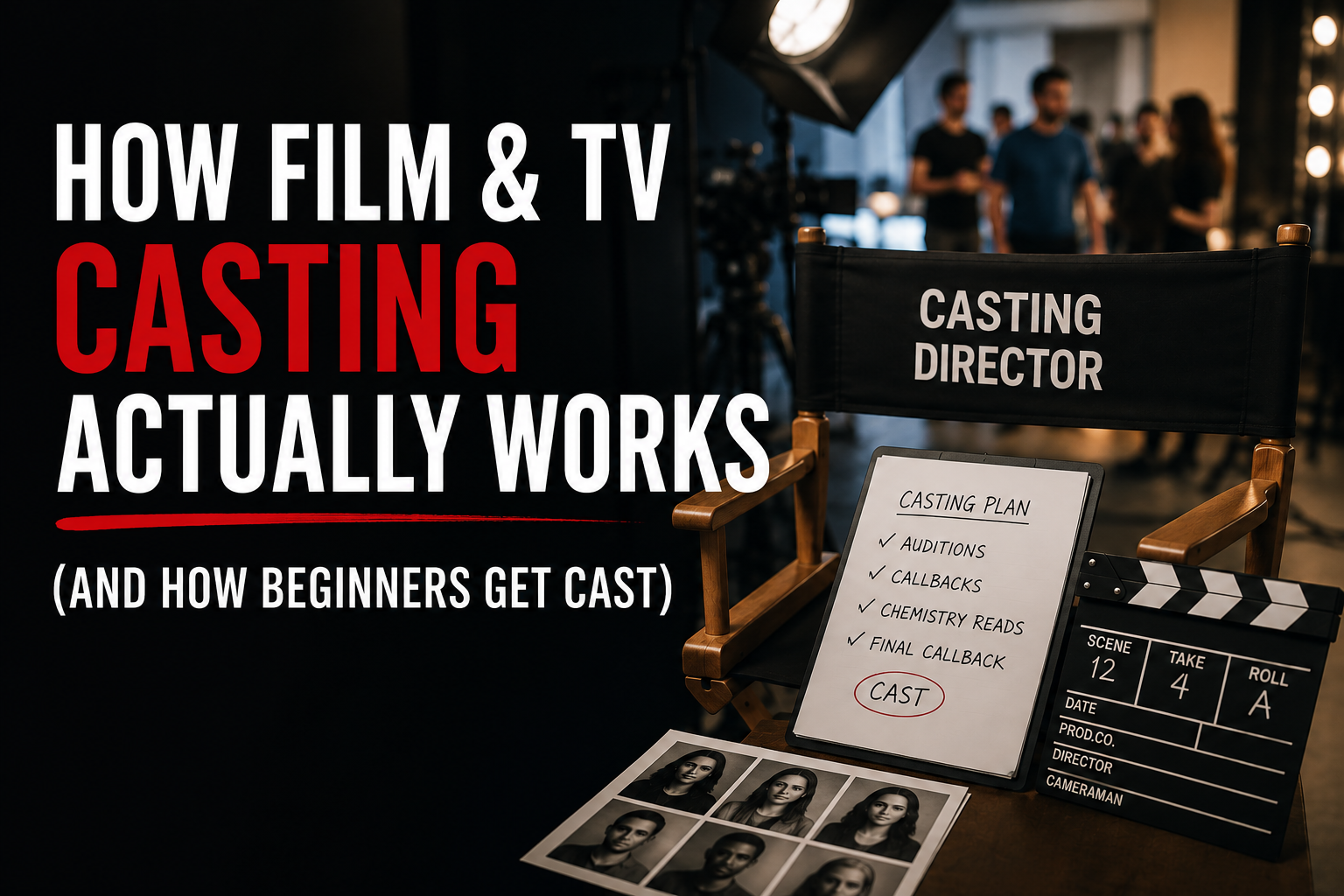
How Film & TV Casting Actually Works (And How Beginners Get Cast)
In this guide, we'll break down how film and television casting works from start to finish and explain how new performers can begin building experience.
For many aspiring performers, film and television casting can feel mysterious.
You submit your information, hear stories about actors landing roles, and wonder what actually happens behind the scenes.
Do casting directors really discover people with no experience? How do auditions work? What happens after you submit? And most importantly, how do beginners get their first opportunities?
The good news is that casting is far more structured—and often more accessible—than most people realize.
In this guide, we'll break down how film and television casting works from start to finish and explain how new performers can begin building experience.
Understanding the Casting Process
Every production needs people.
Whether it's a major streaming series, an independent film, a television commercial, or a student project, someone must fill every role that appears on screen.
The casting process exists to help productions find the right people for those roles.
While every project is different, most productions follow a similar process:
- Roles are created
- Casting directors are hired
- Auditions are announced
- Talent submits
- Auditions take place
- Producers and directors review options
- Talent is selected
- Contracts are finalized
Most performers only see the audition stage, but a great deal happens before and after.
Who Is Involved In Casting?
Several people influence casting decisions.
Casting Directors
Casting directors are responsible for finding talent and presenting options to the production team.
Their job includes:
- Reviewing submissions
- Organizing auditions
- Running casting sessions
- Recommending talent
- Managing callbacks
Contrary to popular belief, casting directors aren't trying to eliminate people.
They're trying to find solutions.
Their goal is to discover performers who fit the role and help productions succeed.
Producers
Producers oversee the business side of a project.
For major productions, producers often have significant input regarding casting decisions.
They may review audition tapes, discuss talent options, and approve final selections.
Directors
The director is responsible for bringing the creative vision of the project to life.
Because actors directly impact the final product, directors are usually heavily involved in selecting key roles.
Understanding Different Types of Roles
Not every role requires years of experience.
In fact, many productions cast a wide range of performers.
Lead Roles
Lead roles are the primary characters that drive the story.
These roles typically involve:
- Extensive screen time
- Multiple scenes
- Significant dialogue
- Greater experience requirements
Competition for lead roles is often intense.
Supporting Roles
Supporting characters help move the story forward and interact with major characters.
Many working actors build successful careers primarily through supporting roles.
Co-Star Roles
Television productions frequently cast co-stars.
These roles often include:
- One or two scenes
- Limited dialogue
- Smaller commitments
Co-star roles can be excellent opportunities for performers building credits.
Background Roles
Background performers (sometimes called extras) appear in scenes to create realistic environments.
Examples include:
- Restaurant patrons
- Office workers
- Hospital visitors
- Sports fans
- Pedestrians
Many performers gain their first on-set experience through background work.
How Auditions Actually Happen
Most modern auditions occur through self-tapes.
Rather than attending an in-person audition, performers record themselves performing a short scene and submit the video online.
A typical self-tape process looks like:
- Receive audition instructions
- Review the scene
- Record the performance
- Submit the tape
- Wait for feedback
This system allows productions to review talent from across the country.
What Are Casting Directors Looking For?
Many beginners assume casting directors only care about experience.
In reality, they're often evaluating several factors.
Authenticity
Casting directors want believable performances.
Natural, genuine acting often stands out more than exaggerated performances.
Fit For The Role
A talented actor can still be wrong for a role.
Age range, appearance, personality, and energy all matter.
Sometimes a performer isn't selected simply because another person fits the character more closely.
Professionalism
Casting teams appreciate performers who:
- Follow directions
- Submit materials correctly
- Meet deadlines
- Communicate professionally
Professional behavior can leave a strong impression.
Preparation
Preparation shows commitment.
Casting directors notice when performers understand the material and arrive ready to work.
Can Beginners Really Get Cast?
Yes.
In fact, productions regularly cast people with little or no professional experience.
The key is understanding where opportunities exist.
Many beginners start with:
- Student films
- Independent films
- Short films
- Commercials
- Background work
- Non-union productions
These opportunities help performers gain experience while building confidence.
Every successful actor started somewhere.
Why Most Beginners Get Rejected
Rejection is a normal part of the industry.
Even experienced actors hear "no" far more often than they hear "yes."
Common reasons include:
The Role Changed
Scripts evolve.
Budgets change.
Entire characters can disappear.
Someone Else Was A Better Fit
Casting is not always about talent.
Often it's about fit.
A role may require a specific look, age range, accent, height, or personality.
Limited Availability
Many productions receive hundreds—or even thousands—of submissions.
Sometimes excellent performers simply aren't selected.
How New Performers Can Improve Their Chances
Build A Complete Profile
Your profile often creates a first impression.
Include:
- Professional photos
- Accurate information
- Relevant experience
- Special skills
- Updated contact information
Develop Useful Skills
Skills can help separate you from other applicants.
Examples include:
- Sports
- Singing
- Dancing
- Martial arts
- Musical instruments
- Foreign languages
Productions frequently search for performers with specific abilities.
Gain On-Camera Experience
The best way to improve is by doing.
Consider opportunities such as:
- Student films
- Community projects
- Independent productions
- Commercial auditions
- Background work
Experience builds confidence.
Confidence improves auditions.
Continue Training
Acting is a craft.
Many successful performers continue training throughout their careers.
Classes can help develop:
- Scene study
- Audition technique
- Improvisation
- On-camera performance
- Character development
What Happens After An Audition?
After submitting an audition, casting teams review tapes and narrow the field.
Some performers may receive:
Callbacks
A callback is a second audition.
It means the production wants to see more.
Callbacks are positive signs, but they do not guarantee booking.
Chemistry Reads
For larger roles, productions may test actors together to evaluate chemistry.
This is common for:
- Romantic partners
- Family members
- Ensemble casts
Offers
If selected, talent receives an offer outlining project details and compensation.
Once agreements are finalized, the performer officially joins the production.
The Truth About Breaking Into Film & Television
Many people imagine there is one breakthrough moment.
In reality, most careers are built gradually.
A typical path often looks like:
Background Work
↓
Student Films
↓
Independent Productions
↓
Commercial Work
↓
Larger Television & Film Opportunities
Every audition, self-tape, and project contributes to growth.
Success rarely happens overnight.
Final Thoughts
Film and television casting isn't reserved for celebrities or performers with decades of experience.
Every production needs talent at different experience levels, and opportunities exist for beginners willing to learn, improve, and consistently put themselves forward.
The performers who succeed aren't always the most experienced.
They're often the ones who continue showing up, continue developing their skills, and continue submitting for opportunities.
The casting process can feel intimidating at first, but once you understand how it works, it becomes much easier to navigate.
Focus on building a strong profile, gaining experience where you can, and approaching each audition as an opportunity to learn.
Every working actor started as a beginner.
Your first opportunity could be closer than you think.