How to Recover From Mistakes During an Audition
Forgetting a line or losing your place doesn't have to ruin your audition. Learn practical strategies for recovering from mistakes while staying calm, confident, and professional.
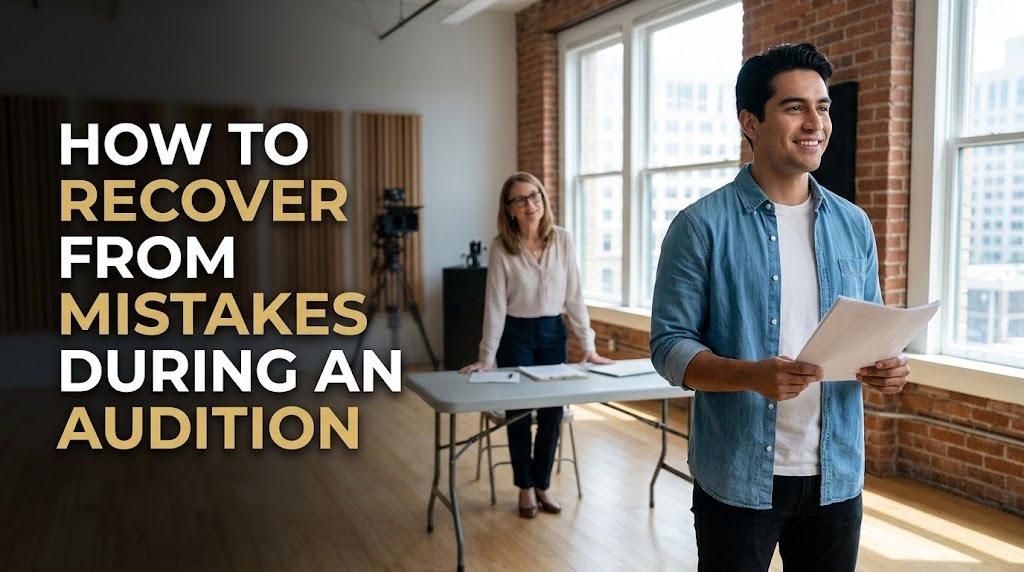
Even experienced actors make mistakes during auditions.
You might forget a line, lose your place in the script, miss a cue, or suddenly feel your nerves taking over.
These moments can feel discouraging, especially if it's your first audition.
The good news is that a small mistake rarely determines the outcome of an audition.
Casting directors understand that actors are human.
In many cases, they're paying closer attention to how you recover than to the mistake itself.
The ability to stay calm, adapt, and continue performing professionally is an important part of the audition process.
In this guide, you'll learn how to recover from common audition mistakes while maintaining your confidence and professionalism.
Remember That Mistakes Are Normal
Every actor has experienced an audition that didn't go exactly as planned.
Mistakes happen because auditions involve:
- Memorization.
- Performance.
- Pressure.
- New environments.
- Unfamiliar people.
Accepting that mistakes are part of acting can help reduce the fear of making them.
The goal isn't perfection.
It's professionalism and truthful performance.
Pause Instead of Panicking
If something goes wrong, resist the urge to rush through the rest of the scene.
Instead:
- Take a slow breath.
- Regain your focus.
- Find your place.
- Continue naturally.
A brief pause often feels much shorter than it does in your own mind.
Remaining calm demonstrates confidence under pressure.
Stay in the Scene
If you forget a line or momentarily lose your place, try to remain emotionally connected to the scene.
Avoid dropping out of character or reacting with visible frustration.
Maintaining your focus allows the performance to continue feeling believable, even if there's a small interruption.
If Necessary, Start Again Professionally
Sometimes restarting is the best option.
If you genuinely lose your place and can't continue, politely ask if you may begin the scene again.
Do so calmly and confidently.
Most casting professionals understand that occasional restarts happen and will appreciate your professionalism.
Learn From the Experience
After the audition, take a few minutes to reflect.
Ask yourself:
- What went well?
- Where did I lose focus?
- How did I recover?
- What can I improve before my next audition?
Every audition—whether it feels successful or not—is an opportunity to grow.
Treat each experience as part of your long-term development rather than a single moment that defines your career.
Don't Apologize Excessively
If you make a mistake, avoid repeatedly apologizing or drawing unnecessary attention to it.
A simple, professional response is usually enough.
For example, if you need to restart a scene, politely ask and continue with confidence.
Dwelling on the mistake can interrupt your performance more than the mistake itself.
Focus on the Next Moment
One missed line doesn't determine the rest of your audition.
Rather than replaying the mistake in your mind, redirect your attention to what comes next.
Stay engaged with:
- Your objective.
- Your scene partner.
- The story.
- The emotional truth of the moment.
Auditions are built one moment at a time.
Confidence Comes From Preparation
Recovering well is easier when you've prepared thoroughly.
Preparation gives you a strong foundation, making it easier to stay composed if something unexpected happens.
Continue building good habits by:
- Reviewing your script carefully.
- Practicing consistently.
- Getting enough rest before auditions.
- Arriving early and organized.
Preparation doesn't eliminate mistakes—but it helps you handle them more effectively.
Common Mistakes After Making a Mistake
Ironically, many actors create a bigger problem by how they react.
Giving Up Mentally
Some actors assume the audition is over after one mistake.
It isn't.
Casting professionals are often interested in seeing how you continue after an unexpected moment.
Stay committed until the audition is complete.
Rushing Through the Rest of the Scene
Trying to "make up" for a mistake by speaking faster or forcing extra energy usually creates additional problems.
Slow down, breathe, and return to the rhythm of the scene.
Breaking Character
Looking embarrassed, laughing nervously, or visibly criticizing yourself can interrupt the performance.
Whenever possible, remain connected to the scene and your character.
Thinking About the Mistake Instead of the Scene
Once the moment has passed, let it go.
Continuing to think about it while performing can affect the rest of your audition.
Focus on the next truthful moment instead.
Frequently Asked Questions
Will forgetting one line ruin my audition?
Usually not.
Casting professionals understand that occasional mistakes happen.
They're often more interested in your overall performance, professionalism, and ability to recover.
Should I ask to start over?
If you've completely lost your place or can't continue naturally, politely asking to restart may be appropriate.
Do so calmly and only when necessary.
What if I make multiple mistakes?
Continue doing your best.
Every audition is different, and one difficult performance doesn't define your ability as an actor.
Learn from the experience and keep moving forward.
How can I become more confident after making mistakes?
Experience is one of the best teachers.
The more auditions you complete, the more comfortable you'll become handling unexpected situations with professionalism.
Your Next Steps
Mistakes are a normal part of acting.
What often leaves the strongest impression isn't whether you made one—but how you responded afterward.
As you continue auditioning:
- Stay calm.
- Breathe.
- Remain present.
- Recover professionally.
- Keep performing with confidence.
Every audition helps you develop resilience, adaptability, and experience that will benefit you throughout your acting career.