Acting Resume Mistakes
A professional acting resume should be accurate, organized, and easy to read. Learn the most common resume mistakes actors make and how to avoid them.

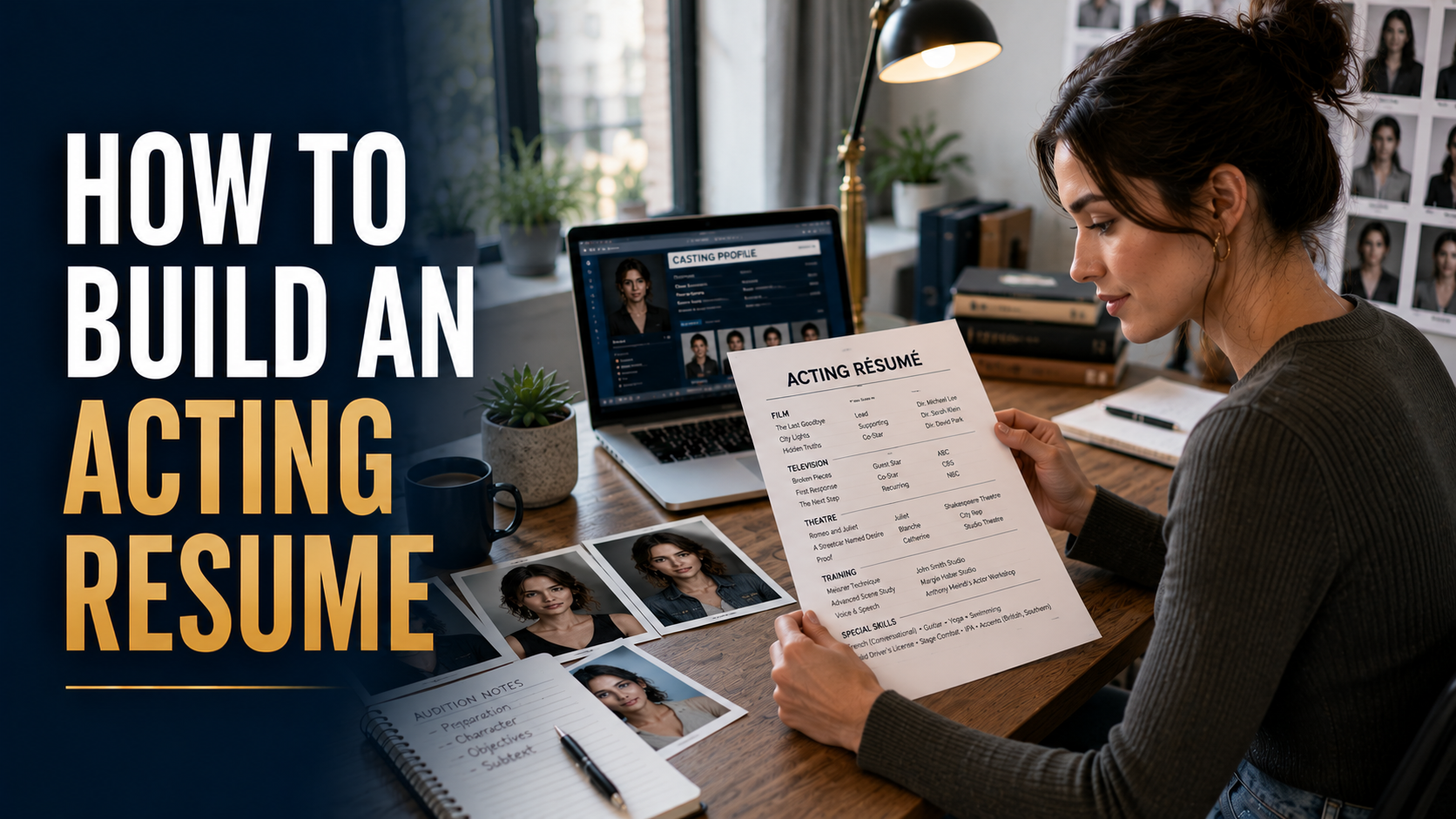
Your acting resume is one of the first professional materials casting directors review alongside your headshot and casting profile.
Even if you have strong experience and training, a poorly organized or inaccurate resume can make it more difficult for casting professionals to quickly understand your background.
Fortunately, most resume mistakes are easy to correct.
The goal isn't to create a perfect document.
It's to present your experience honestly, professionally, and in a format that's easy to review.
In this guide, we'll look at the most common acting resume mistakes and explain how to avoid them.
Mistake #1: Exaggerating Your Experience
One of the biggest mistakes an actor can make is listing experience they haven't actually earned.
Your resume should accurately reflect your:
- Acting credits.
- Training.
- Workshops.
- Professional skills.
- Performance experience.
Honesty builds credibility.
Casting professionals value accurate information far more than inflated resumes.
Mistake #2: Including Irrelevant Information
Unlike a traditional employment resume, an acting resume focuses on your work as a performer.
In most cases, unrelated jobs don't need to be included unless they're specifically relevant to the role or requested by the production.
Keep the emphasis on your acting career and professional development.
Mistake #3: Poor Organization
Casting directors often review many submissions in a short period of time.
A cluttered resume can make important information difficult to find.
Aim for a layout that is:
- Clean.
- Consistent.
- Easy to scan.
- Professionally formatted.
- Free of unnecessary design elements.
Simple formatting helps your experience stand out.
Mistake #4: Listing Skills You Can't Perform
The special skills section should include abilities you can confidently demonstrate if asked.
For example, if you list a language, instrument, sport, or accent, be prepared to perform that skill during an audition or on set if required.
Only include skills you're genuinely comfortable using professionally.
Mistake #5: Forgetting to Update Your Resume
As your career grows, your resume should grow with it.
Regularly update your resume after:
- Booking new projects.
- Completing acting classes.
- Learning new professional skills.
- Finishing workshops.
- Expanding your experience.
An up-to-date resume helps ensure casting professionals always see your most relevant qualifications.
Mistake #6: Using an Unprofessional Format
Your acting resume should be easy to read at a glance.
Avoid:
- Decorative fonts.
- Bright colors.
- Excessive graphics.
- Overly complex layouts.
- Inconsistent spacing.
A simple, organized format allows casting professionals to focus on your experience instead of the design.
Mistake #7: Including Outdated Information
An acting resume should always reflect your current professional background.
Review it regularly to ensure that:
- Your contact or representation details are current.
- Your latest acting credits are included.
- Older or less relevant information has been removed when appropriate.
- Training and special skills remain accurate.
Keeping your resume current demonstrates professionalism and attention to detail.
Mistake #8: Not Proofreading
Even a strong resume can lose credibility if it contains spelling mistakes, formatting inconsistencies, or incorrect project names.
Before submitting your resume:
- Check spelling and grammar.
- Verify names of productions, directors, and instructors.
- Ensure formatting is consistent throughout.
- Review dates and contact information.
- Ask someone you trust to proofread it if possible.
A second set of eyes can often catch details you've overlooked.
Common Questions About Acting Resumes
Should beginners include every class they've taken?
Not necessarily.
Choose the classes and training that best represent your current level of experience and professional development.
As your career grows, you can streamline older or less relevant entries.
Can I include student films or community theatre?
Yes.
Many actors begin their careers with student productions, community theatre, independent films, and workshops.
Present these experiences honestly and organize them clearly within your resume.
Should I customize my resume for different auditions?
In some situations, it can be helpful to highlight experience that is particularly relevant to a specific project.
However, always keep the information accurate and avoid removing important credits simply to fit one role.
Is it okay if my resume is short?
Absolutely.
A concise, truthful resume is far more effective than one filled with unnecessary or exaggerated information.
Every actor starts somewhere, and your resume will naturally grow as your experience expands.
Your Next Steps
Your acting resume should make it easy for casting professionals to understand your experience and training.
As you review your resume:
- Keep it honest and up to date.
- Focus on acting-related experience.
- Use a clean, professional format.
- Include only skills you can confidently perform.
- Proofread carefully before every submission.
A clear, well-organized resume complements your headshots and casting profile, helping present you as a prepared and professional actor.