Film Auditions Explained
Film auditions focus on believable characters and emotional storytelling. Learn what to expect, how to prepare, and how film auditions differ from other types of auditions.
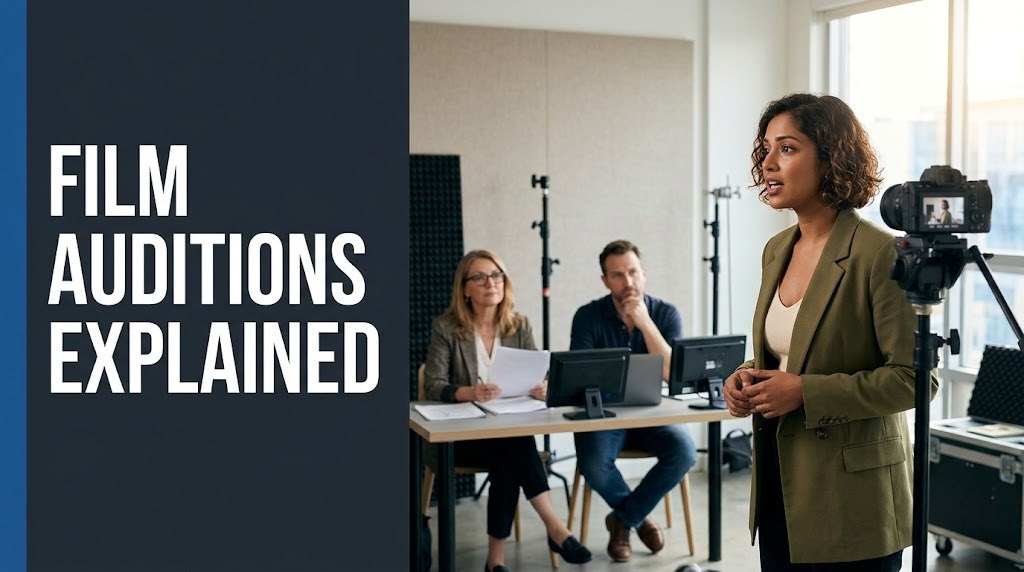
Film auditions often feel different from other types of acting auditions.
Rather than focusing primarily on personality or quick interactions, film auditions usually give actors an opportunity to explore a character in greater depth.
Casting teams want to see believable performances that support the story and feel emotionally truthful on camera.
Whether you're auditioning for an independent film or a major studio production, understanding the audition process can help you feel more prepared and confident.
In this guide, we'll explain what typically happens during a film audition, what casting professionals may be evaluating, and how you can prepare effectively.
What Is a Film Audition?
A film audition is part of the casting process used to select actors for feature films, short films, and independent productions.
Actors are usually asked to perform one or more scenes from the screenplay or specially prepared audition material known as "sides."
Unlike commercials, where performances are often brief and personality-driven, film auditions typically place greater emphasis on character development and storytelling.
What Happens During a Film Audition?
Every production follows its own process, but many film auditions include:
- A brief introduction or slate.
- One or more scripted scenes.
- Direction from the casting team.
- Multiple takes of the same scene.
- Occasionally, a callback invitation for later rounds.
Some auditions are held in person, while others are submitted as self-tapes or conducted virtually.
Character Is at the Center
Film auditions usually ask actors to build believable characters rather than simply delivering dialogue.
As you prepare, consider:
- What does my character want?
- What happened before this scene?
- How does the character change?
- What relationships influence the moment?
These questions help create performances that feel grounded and authentic.
Emotional Truth Matters
Film cameras capture subtle details.
Small facial expressions, genuine reactions, and honest emotional responses often have a greater impact than exaggerated performances.
Rather than trying to "act" emotional, focus on understanding the character's circumstances and responding truthfully within the scene.
Authenticity is often more compelling than intensity.
Expect to Receive Direction
Many film auditions include adjustments from the director or casting director.
You may be asked to:
- Try a different emotional approach.
- Change your objective.
- Slow down your delivery.
- Increase or reduce your energy.
Receiving direction doesn't mean your first performance was wrong.
It gives the creative team an opportunity to see your flexibility and collaboration skills.
Preparation Goes Beyond Memorizing Lines
Knowing your dialogue is important, but strong film auditions require more than memorization.
Spend time exploring:
- Your character's objective.
- The relationships in the scene.
- Emotional transitions.
- The circumstances surrounding the moment.
The better you understand the story, the more naturally your performance will unfold.
Be Comfortable With Silence
Unlike stage acting, film often captures subtle moments that don't require constant movement or dialogue.
Don't feel pressured to fill every pause.
Sometimes a thoughtful look, a quiet reaction, or a brief moment of reflection communicates more than additional words.
Trust the scene and allow authentic moments to develop naturally.
Common Mistakes in Film Auditions
Many actors unintentionally weaken their auditions by focusing on the wrong things.
Playing Emotion Instead of the Story
Rather than deciding to "act sad" or "act angry," focus on what your character is trying to accomplish.
Objectives create believable behavior.
Emotions often emerge naturally from pursuing those objectives.
Overacting for the Camera
Film cameras capture subtle expressions and small behavioral details.
Large gestures or exaggerated reactions that might work on stage can feel unnatural on screen.
Aim for truthful, grounded performances.
Ignoring the Other Character
Even if you're reading opposite a casting assistant, remember that you're responding to another person.
Listen carefully and allow their words to influence your reactions.
Authentic interaction creates stronger on-camera performances.
Becoming Too Attached to One Interpretation
Film auditions are collaborative.
Directors may ask you to explore different emotional approaches or motivations.
Stay flexible and be willing to adjust your performance while remaining connected to the character.
Frequently Asked Questions
Do I need professional experience to audition for films?
Not always.
Many independent films, student productions, and some feature films consider actors with limited or no professional experience when they fit the role.
Always review the casting notice to understand the project's specific requirements.
Are film auditions usually memorized?
Many productions encourage actors to memorize their scenes whenever possible.
However, some auditions allow actors to hold the script.
Follow the instructions provided by the casting team.
What are film casting directors looking for?
Every production is different, but many film casting teams value:
- Truthful performances.
- Emotional authenticity.
- Strong listening skills.
- Collaboration.
- Professionalism.
Your ability to bring the character to life often matters more than delivering a technically perfect performance.
What if I receive direction during the audition?
That's completely normal.
Film directors frequently ask actors to explore different interpretations before making casting decisions.
View adjustments as opportunities to demonstrate flexibility rather than as criticism.
Your Next Steps
Film auditions allow you to demonstrate your ability to tell compelling stories through believable characters.
As you continue preparing:
- Analyze the script carefully.
- Understand your character's objective.
- Stay emotionally truthful.
- Listen actively.
- Remain open to direction.
The more you practice these skills, the more confident you'll become in front of the camera.