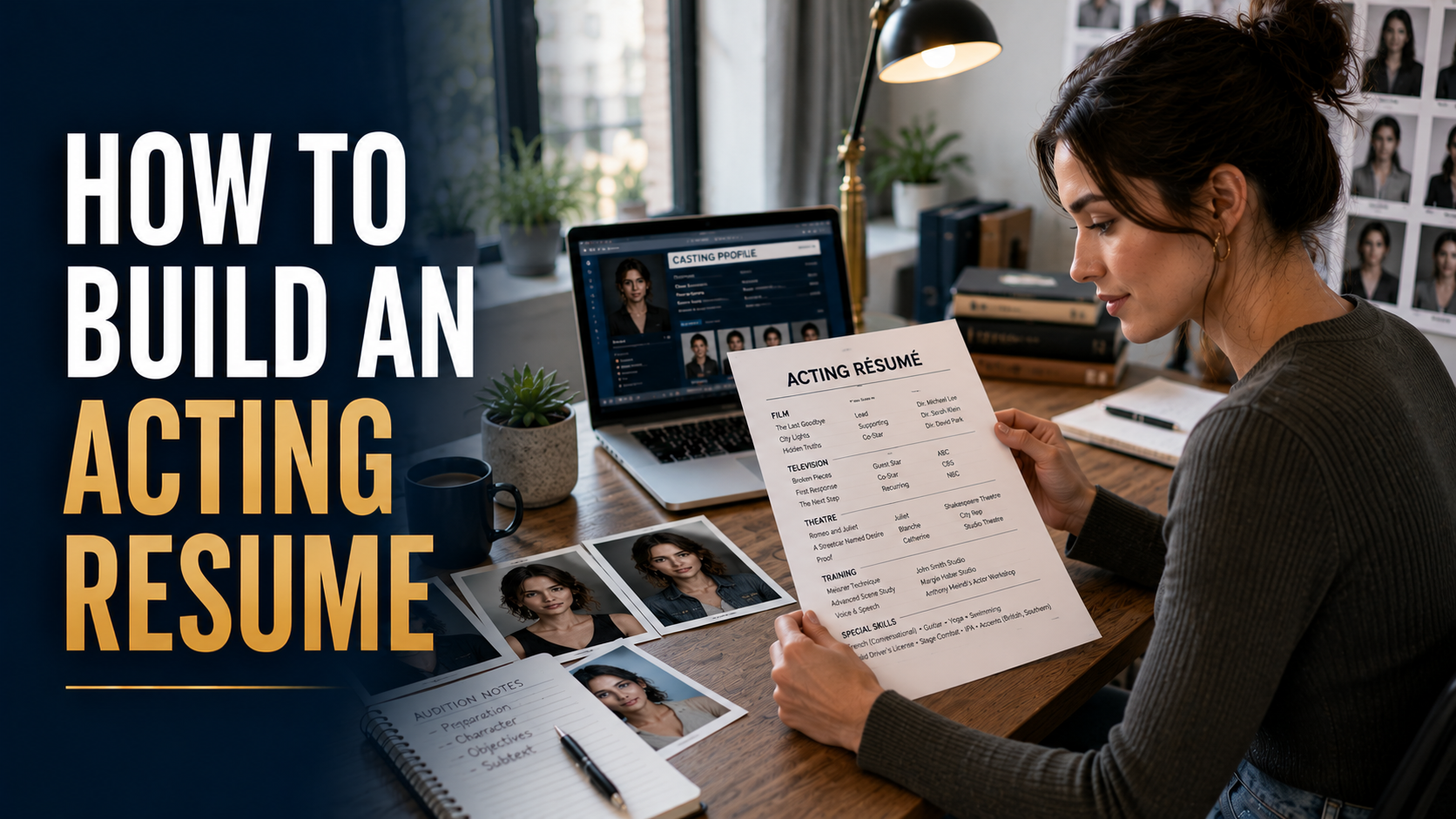
How to Write an Actor Bio
Your actor bio introduces you to casting professionals beyond your headshot and resume. Learn how to write a concise, professional biography that accurately represents your acting career.

Your actor bio is a short introduction that helps casting professionals, agents, and other industry professionals learn more about you.
Unlike your acting resume, which lists your experience, an actor bio provides context about your background, training, interests, and career.
A good bio shouldn't try to impress readers with exaggerated language.
Instead, it should present an honest, professional summary that complements your headshot, resume, and demo reel.
In this guide, you'll learn what to include in an actor bio, how to organize it, and how to write one that feels natural and authentic.
What Is an Actor Bio?
An actor bio is a brief professional introduction that appears on:
- Casting profiles.
- Personal websites.
- Agency pages.
- Production websites.
- Press materials.
Its purpose is to help readers understand who you are beyond your list of acting credits.
Think of it as a short overview of your professional journey.
Keep It Professional
Your bio should reflect the same professional tone as the rest of your acting materials.
Focus on information that's relevant to your acting career, such as:
- Acting experience.
- Professional training.
- Performance interests.
- Career goals.
- Relevant accomplishments.
Avoid turning your bio into a personal life story.
The emphasis should remain on your work as an actor.
Start With a Strong Introduction
Many actor bios begin with a simple introduction that explains who you are and what you do.
For example, you might briefly mention:
- Your professional focus.
- Where you're based.
- The types of projects you enjoy.
- Your training or experience.
The introduction should be concise and easy to understand.
Highlight Relevant Experience
After introducing yourself, briefly summarize your professional background.
Depending on your experience, you may mention:
- Film work.
- Television appearances.
- Theatre productions.
- Commercial projects.
- Voice acting.
- Professional training.
You don't need to list every credit.
Your resume already serves that purpose.
Instead, summarize your experience in a way that supports your overall professional profile.
Show a Bit of Personality
An actor bio shouldn't feel robotic.
While maintaining a professional tone, it's perfectly appropriate to briefly mention interests that help readers understand who you are as a performer.
This could include:
- Creative interests.
- Performance passions.
- Artistic goals.
- Relevant hobbies connected to your work.
The key is to remain authentic without drifting too far from your professional focus.
Keep Your Bio Updated
Your actor bio should grow as your career develops.
Whenever you complete meaningful projects or professional training, take a few minutes to review your bio and make sure it still reflects your current experience.
Consider updating it after:
- Booking major acting roles.
- Completing professional training.
- Signing with representation.
- Receiving notable industry recognition.
- Reaching important career milestones.
An up-to-date bio helps ensure your professional profile stays current.
Tailor Your Bio for Different Platforms
While the core information should remain consistent, you may adjust the length of your bio depending on where it appears.
For example:
- A casting profile may require a short introduction.
- Your personal website may include a more detailed biography.
- Press materials may include additional career highlights.
No matter the platform, your bio should always remain accurate and professional.
Let Your Resume Tell the Details
One common mistake is trying to include every acting credit inside your bio.
Your resume already provides that information.
Instead, use your bio to summarize your experience and give readers a sense of your professional background and goals.
Think of your bio as an introduction—not a complete career history.
Common Mistakes When Writing an Actor Bio
Here are several mistakes actors commonly make.
Writing Too Much
A bio should be concise and easy to read.
Long paragraphs filled with excessive detail can make it harder for casting professionals to quickly understand who you are.
Focus on the highlights rather than trying to tell your entire story.
Using Exaggerated Language
Avoid phrases that make unrealistic claims about your career or abilities.
Professional, straightforward writing is usually much more effective than trying to sound overly impressive.
Let your experience speak for itself.
Repeating Your Resume
If your bio simply lists the same acting credits found on your resume, it isn't adding much value.
Instead, provide context, personality, and a brief overview of your professional journey.
Your resume and bio should complement one another rather than duplicate each other.
Forgetting to Proofread
Before publishing your bio, review it carefully.
Check for:
- Grammar and spelling errors.
- Outdated information.
- Inconsistent wording.
- Broken formatting.
A polished bio reflects the same professionalism as the rest of your acting materials.
Frequently Asked Questions
How long should an actor bio be?
Most actor bios are relatively short and easy to read.
The exact length depends on where the bio will appear, but concise writing is generally more effective than lengthy descriptions.
Should beginners have an actor bio?
Yes.
Even if you're new to acting, a professional bio can introduce your training, interests, and career goals.
Your bio will naturally evolve as you gain more experience.
Should I write in first person or third person?
Many actor bios are written in the third person, especially for casting profiles, agency websites, and press materials.
However, always follow the preferred style of the platform where your bio will appear.
Can I mention hobbies?
You may briefly mention interests that support your identity as a performer, but your acting career should remain the primary focus.
Choose details that feel authentic and professionally relevant.
Your Next Steps
Your actor bio helps introduce you before casting professionals ever meet you.
As you develop your bio:
- Keep it concise and professional.
- Focus on your acting career.
- Let your personality come through naturally.
- Update it as your experience grows.
- Make sure it complements your headshot, resume, and demo reel.
A well-written bio helps complete your professional profile and gives casting professionals another reason to remember you.