Independent Films vs. Studio Productions
Discover how independent films and studio productions differ in scale, workflow, resources, and opportunities for actors working in the film industry.
Actors often hear the terms independent film and studio production, but understanding the difference between them can help set realistic expectations before stepping onto a set.
Although both types of productions share the same goal of telling compelling stories, they often differ in scale, budget, production resources, schedules, and creative processes.
Neither approach is inherently better than the other.
Both provide valuable opportunities for actors to gain experience, collaborate with talented professionals, and develop their careers.
In this guide, we'll explore the differences between independent films and studio productions and explain what actors can typically expect from each environment.
Understanding Two Different Production Models
Film productions can vary greatly in size and structure.
In general:
Independent films are produced outside the traditional major studio system, often with independently secured financing.
Studio productions are backed by established film studios or their production divisions, which may provide larger budgets, broader distribution, and extensive production resources.
While financing models differ, both production types rely on the collaboration of talented cast and crew members.
Differences in Scale and Resources
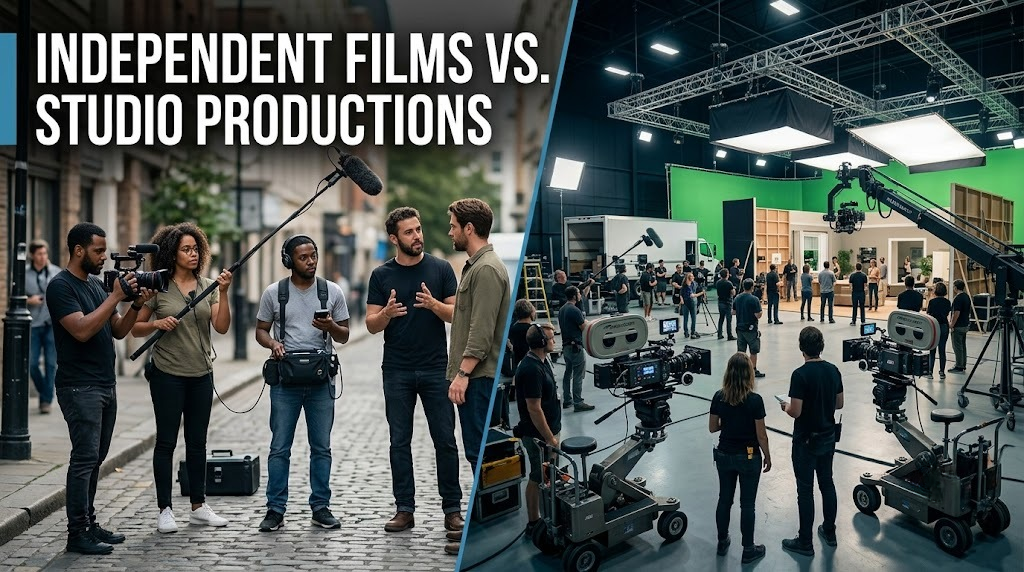
One of the most noticeable differences is the size of the production.
Independent films may feature:
- Smaller crews.
- Leaner production schedules.
- Limited filming locations.
- More flexible workflows.
Studio productions may include:
- Larger production teams.
- Extensive technical resources.
- Purpose-built soundstages.
- Larger visual effects departments.
- More complex production logistics.
The experience for actors can vary, but professionalism is expected on both types of productions.
Creative Collaboration Looks Different
Every production develops its own creative process.
Independent productions sometimes operate with smaller teams, allowing departments to collaborate closely throughout filming.
Studio productions often involve larger organizational structures with specialized departments handling different aspects of production.
Regardless of the production type, successful filmmaking depends on clear communication and teamwork.
Opportunities for Actors
Both independent and studio productions can provide valuable professional experience.
Actors may find opportunities to:
- Build on-set experience.
- Develop new skills.
- Expand professional networks.
- Strengthen their resumes.
- Explore different storytelling styles.
The value of a role is not determined solely by the size of the production.
Meaningful experience can come from projects of every scale.
Every Production Has Its Own Culture
No two productions operate exactly alike.
Factors such as:
- Budget.
- Schedule.
- Genre.
- Filming locations.
- Crew size.
- Creative leadership.
all influence the daily workflow.
Approaching each project with flexibility and professionalism allows actors to adapt successfully regardless of the production environment.
Common Misconceptions About Independent Films and Studio Productions
Actors who are beginning their careers sometimes assume one type of production is always better than the other.
In reality, both offer unique experiences and professional opportunities.
Here are a few common misconceptions.
Studio Productions Are Always Better for Your Career
Studio productions can offer larger budgets and extensive resources, but they aren't the only path to career growth.
Independent films may provide opportunities to:
- Work with emerging filmmakers.
- Play substantial characters.
- Build professional relationships.
- Gain valuable on-set experience.
- Showcase your acting abilities.
Career development depends on the quality of your work and the opportunities you pursue, not solely on the size of the production.
Independent Films Aren't Professional
Independent productions often operate with smaller budgets, but that doesn't mean they lack professionalism.
Many independent filmmakers follow the same production standards, planning processes, and collaborative workflows found on larger productions.
Actors should approach every project with the same level of preparation and professionalism.
Every Studio Production Works the Same Way
Large productions vary just as much as smaller ones.
Schedules, crew structures, creative approaches, and filming methods differ from one project to another.
Avoid making assumptions based on the size of the production alone.
Each set has its own workflow and culture.
Smaller Productions Require Less Preparation
Regardless of the budget, actors are expected to:
- Arrive prepared.
- Know their material.
- Communicate professionally.
- Follow production procedures.
- Work collaboratively with cast and crew.
Professional habits matter on every production.
Focus on Learning From Every Opportunity
Every production offers valuable experience.
Whether you're working on an independent film or a major studio project, you can continue developing by:
- Observing experienced professionals.
- Strengthening your collaboration skills.
- Expanding your network.
- Learning different production workflows.
- Building confidence on set.
Each project adds to your growth as an actor.
Professionalism Is Universal
Although production size may change, professional expectations remain remarkably consistent.
Actors who build strong reputations are known for:
- Being reliable.
- Arriving prepared.
- Adapting to different environments.
- Respecting cast and crew.
- Maintaining a positive attitude.
These qualities are valued across productions of every size.
Frequently Asked Questions
Should new actors only pursue studio productions?
No.
Independent films and studio productions both provide opportunities to gain experience, develop skills, and build professional relationships.
Many successful actors have worked across both types of productions throughout their careers.
Do independent films always have smaller crews?
Many independent productions operate with leaner teams, but crew size varies depending on the project's scope, budget, and production requirements.
Every production is different.
Are studio productions more structured?
Many studio productions involve larger departments and more extensive planning, but every production develops workflows that support its own creative and logistical needs.
Organization exists across productions of every size.
Which type of production is better for building experience?
Both can provide valuable learning opportunities.
The most important factors are continuing to improve your craft, working professionally, and gaining practical experience with each project.
Your Next Steps
Understanding the differences between independent films and studio productions helps you approach every opportunity with realistic expectations.
As you continue building your acting career:
- Stay open to different types of productions.
- Prepare professionally for every role.
- Learn from every set you work on.
- Build positive relationships with cast and crew.
- Focus on continuous growth rather than production size.
Every production—whether independent or studio-backed—offers opportunities to develop your skills, expand your experience, and contribute to meaningful storytelling.