What Are Principal Roles in Film and Television?
Principal roles are the characters who drive the story in film and television. Learn what principal actors do, how these roles differ from other performers, and what to expect on set.
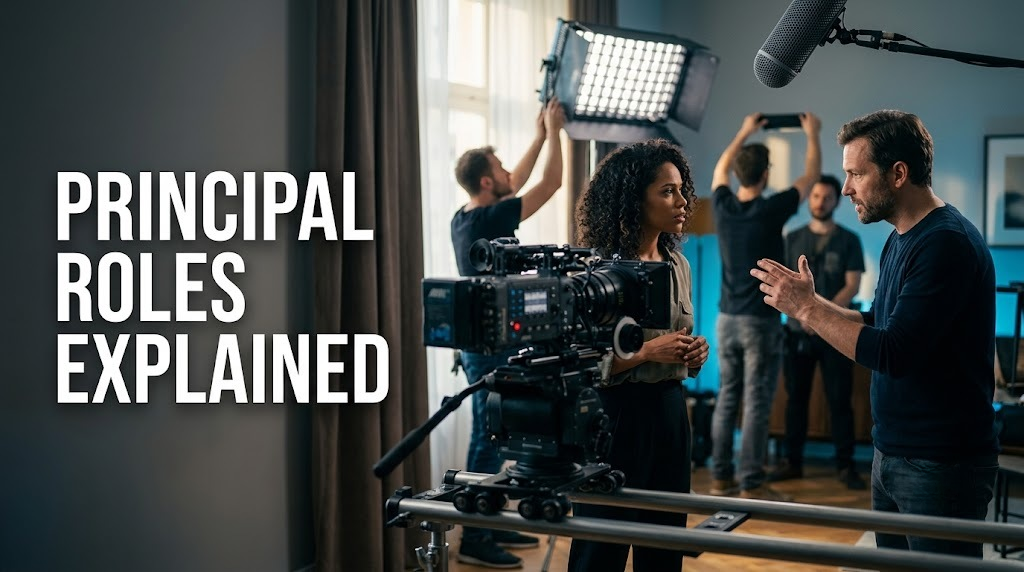
Every film and television production features performers who help tell the story.
Some actors create realistic environments through background work, while others portray the characters audiences follow throughout the production.
These performers are commonly known as principal actors.
If you're beginning your acting career, understanding what principal roles involve can help you better understand how productions are structured and what responsibilities come with larger on-screen roles.
In this guide, we'll explain what principal roles are, how they differ from other acting roles, and what actors can expect when working in these positions.
Understanding the Role in the Story
Principal actors portray the characters who directly move a story forward.
Unlike background performers, principal actors play identifiable characters whose actions, decisions, and relationships help shape the narrative.
Depending on the production, principal performers may appear in:
- Feature films.
- Television series.
- Commercials.
- Streaming productions.
- Independent films.
Whether the role is large or small, every principal performer contributes to telling the story.
Lead, Supporting, and Other Principal Characters
Not every principal actor is the lead.
Productions often include several types of principal performers, including:
- Lead characters.
- Supporting characters.
- Recurring television characters.
- Guest stars.
- Co-stars.
Each role serves a different purpose while helping develop the story from beginning to end.
Responsibilities During Production
Principal performers often work closely with the creative team throughout filming.
Their responsibilities may include:
- Performing scripted scenes.
- Developing believable characters.
- Collaborating with directors.
- Rehearsing with fellow actors.
- Maintaining continuity across multiple filming days.
Every scene contributes to the overall production, making preparation and consistency essential.
Preparing for Filming
Before cameras begin rolling, actors may spend time preparing for their roles in several ways.
Depending on the production, preparation can include:
- Studying the script.
- Exploring character relationships.
- Rehearsing scenes.
- Participating in table reads.
- Attending wardrobe fittings.
- Meeting with directors.
The amount of preparation varies depending on the production and the size of the role.
Why Every Production Is Different
No two productions follow exactly the same process.
Some principal roles require only a single day of filming, while others may span weeks or months.
The scope of a role depends on factors such as:
- The script.
- Production schedule.
- Character importance.
- Number of scenes.
- Creative requirements.
Every project presents unique opportunities and responsibilities.
Common Misconceptions About Principal Roles
Actors who are new to the industry often have misconceptions about principal roles.
Let's clear up a few of the most common ones.
Every Principal Role Is a Lead Role
Not necessarily.
A production may include many principal actors, each with different levels of involvement in the story.
While lead characters often appear throughout the entire production, supporting characters, guest stars, and co-stars may also be principal performers with important contributions to the narrative.
Principal Actors Always Have a Lot of Dialogue
Dialogue is common in many principal roles, but the amount varies significantly.
Some principal characters carry lengthy conversations, while others communicate through brief scenes, meaningful actions, or even silent performances.
The importance of a role isn't determined by the number of lines it contains.
Bigger Roles Mean Less Guidance
In reality, principal actors often receive more direction and collaboration because their performances have a greater influence on the story.
Depending on the production, they may spend additional time:
- Rehearsing scenes.
- Discussing character development.
- Working with directors.
- Coordinating with other cast members.
- Maintaining continuity throughout filming.
Preparation becomes increasingly important as responsibilities grow.
Every Production Works the Same Way
Each production has its own creative process.
One principal role might involve a single filming day, while another may require months of work.
Schedules, rehearsal time, filming methods, and production workflows all vary depending on the project.
Collaboration Is Part of the Job
Principal performers rarely work alone.
Throughout production, they collaborate with professionals across many departments, including:
- Directors.
- Fellow cast members.
- Assistant directors.
- Camera operators.
- Hair and makeup artists.
- Costume designers.
- Script supervisors.
Successful productions rely on clear communication and teamwork from everyone involved.
Professionalism Matters Every Day
Regardless of the size of the role, productions expect principal actors to maintain a professional attitude.
That includes:
- Arriving prepared.
- Knowing the script.
- Following direction.
- Respecting production schedules.
- Communicating professionally.
- Supporting a positive working environment.
Professional habits help productions run efficiently and build a strong reputation within the industry.
Frequently Asked Questions
Do principal actors always have speaking roles?
Many principal roles include dialogue, but not all do.
The responsibilities of a principal performer depend on the character and the needs of the production.
Can a principal role be small?
Yes.
Some principal characters appear in only a few scenes while still playing an important part in the story.
The significance of a role isn't determined solely by screen time.
Are principal actors involved in rehearsals?
Many productions schedule rehearsals, table reads, wardrobe fittings, or other preparation for principal cast members.
The exact process varies depending on the production and the complexity of the role.
Is every principal role the same?
No.
Every production has different creative goals, schedules, and filming requirements.
The responsibilities of a principal performer can vary considerably from one project to another.
Your Next Steps
Understanding principal roles helps you better appreciate how stories are brought to life on screen and how actors contribute to every stage of production.
As you continue developing your acting career:
- Learn how different on-screen roles fit within a production.
- Prepare thoroughly for every opportunity.
- Collaborate professionally with cast and crew.
- Stay adaptable throughout the filmmaking process.
- Continue building your experience with each new project.
Whether you're cast in a lead role, a supporting role, or another principal character, professionalism and preparation will help you make the most of every opportunity.