Screen Tests vs. Auditions
Screen tests and auditions serve different purposes during casting. Learn how they differ, when they happen, and what to expect if you're invited to a screen test.
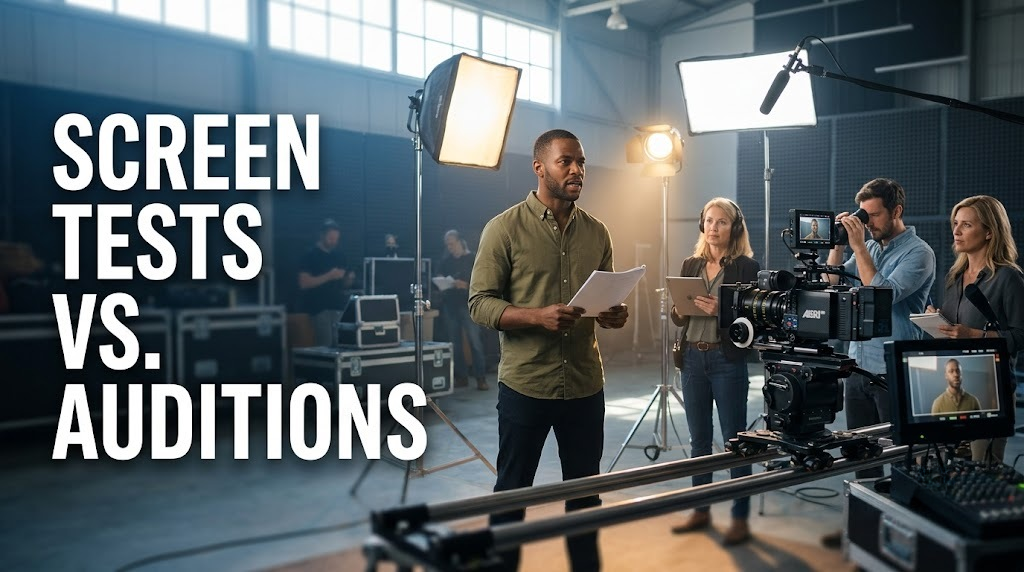
Most actors are familiar with auditions.
Fewer have experienced a screen test.
Although both are important parts of the casting process, they serve different purposes.
An audition helps the casting team evaluate whether you're right for a role.
A screen test typically happens later in the process, after the creative team has narrowed its choices.
Rather than deciding whether you can perform the character, a screen test often helps determine how you appear on camera, how you interact with other actors, and whether you're the right fit for the production.
Understanding the difference between auditions and screen tests can help you feel more prepared if you're invited to one.
What Is an Audition?
An audition is the first opportunity for casting professionals to evaluate an actor for a specific role.
Depending on the production, auditions may include:
- Self-tapes.
- Live auditions.
- Virtual auditions.
- Callback auditions.
- Cold readings.
- Prepared scenes.
The purpose is to determine whether your performance matches the creative vision for the character.
Many actors audition for a role, but only a small number advance to later stages of the casting process.
What Is a Screen Test?
A screen test usually occurs after auditions and callbacks.
At this stage, the creative team is often considering a small group of finalists.
Instead of evaluating acting ability alone, they may also assess:
- How you appear on camera.
- Your on-screen presence.
- Chemistry with other actors.
- How you look under professional lighting.
- Whether you fit the visual style of the production.
Screen tests help directors make final casting decisions before production begins.
Why Productions Use Screen Tests
A great performance during an audition doesn't always tell the entire story.
Some qualities only become clear when actors are filmed using professional cameras, lenses, lighting, costumes, or makeup.
Screen tests allow the creative team to evaluate how everything works together before making a final commitment.
This is particularly common for leading roles in feature films, television series, and large-scale productions.
What Happens During a Screen Test?
Every production has its own process, but a screen test may include:
- Performing scripted scenes.
- Reading with another actor.
- Wearing wardrobe selected by the production.
- Receiving multiple adjustments from the director.
- Recording several takes from different camera angles.
Some productions also combine screen tests with chemistry reads when evaluating potential co-stars.
A Screen Test Isn't a Guarantee
Receiving a screen test invitation is an exciting achievement.
However, it's important to remember that it isn't a guarantee you'll receive the role.
The production may still be evaluating several actors before making a final decision.
Being invited simply means you've advanced significantly in the casting process.
Treat a Screen Test Like a Professional Work Session
A screen test is often more detailed than a standard audition.
You may be asked to perform the same scene several times while the director adjusts your performance, camera angles, wardrobe, or blocking.
Approach the experience as an opportunity to collaborate rather than trying to deliver one "perfect" take.
Remain:
- Flexible.
- Professional.
- Patient.
- Open to direction.
The creative team is evaluating how you work—not just how you perform.
Stay Focused on the Story
Because screen tests often involve professional cameras, lighting, and production equipment, it's easy to become distracted by the environment.
Instead of thinking about how you look on camera, focus on:
- Your character's objective.
- Your relationship with the other character.
- Listening truthfully.
- Responding naturally.
Strong storytelling remains the most important part of your performance.
Screen Tests Often Include Creative Collaboration
Depending on the production, you may work with several members of the creative team during a screen test.
This could include:
- The director.
- The casting director.
- Producers.
- The cinematographer.
- Hair and makeup professionals.
- Costume designers.
Each department may be evaluating how your performance supports the overall vision of the project.
Remain professional and collaborative throughout the process.
Common Mistakes During Screen Tests
Screen tests are exciting, but they also bring additional pressure.
Here are a few common mistakes to avoid.
Assuming You've Already Been Cast
Being invited to a screen test is a significant achievement, but the casting process is still ongoing.
Continue approaching every stage with preparation, professionalism, and humility.
Becoming Too Self-Conscious
Knowing you're being filmed with professional equipment can make some actors overly aware of every movement.
Instead of focusing on the camera, stay connected to the scene and allow your performance to unfold naturally.
Resisting Direction
Screen tests often involve multiple adjustments.
Directors want to see how well you respond to collaboration.
Remain flexible and embrace the opportunity to explore different interpretations.
Comparing Yourself to Other Actors
You may see other finalists during a screen test.
Avoid comparing your performance to theirs.
Focus on delivering your strongest, most truthful work rather than trying to predict the outcome.
Frequently Asked Questions
Does a screen test mean I've almost booked the role?
Often, a screen test means you've progressed to one of the final stages of casting.
However, it doesn't guarantee you'll be cast.
The production may still be evaluating several finalists before making a decision.
Are screen tests only for leading roles?
Not always.
While they're more common for principal and leading roles, some productions also conduct screen tests for important supporting characters or roles that require strong on-screen chemistry.
Will I wear a costume during a screen test?
Sometimes.
Depending on the production, you may be asked to wear wardrobe provided by the costume department or clothing that helps the creative team visualize the character.
How should I prepare for a screen test?
Prepare the same way you would for an important audition:
- Know your material.
- Understand your character.
- Stay open to direction.
- Arrive prepared.
- Focus on collaboration rather than perfection.
Your Next Steps
A screen test represents an exciting milestone in the casting process.
If you're invited to one, remember that you've already demonstrated your acting ability through earlier auditions.
Now the creative team is evaluating how your performance fits the production as a whole.
Continue to:
- Stay prepared.
- Listen carefully.
- Adapt confidently.
- Support your scene partners.
- Tell the story truthfully.
Approaching a screen test with professionalism and confidence will help you make the most of the opportunity.