As digital marketing has evolved, performers now encounter opportunities in both user-generated content (UGC) and traditional commercial acting.
Although both involve appearing on camera to support advertising or promotional campaigns, they often differ in production style, creative approach, and the role performers play.
Understanding these differences helps actors evaluate opportunities, prepare appropriately, and choose projects that align with their interests and career goals.
In this guide, you'll learn how UGC and commercial acting compare, what each format typically involves, and what performers can expect when working in either area.
Understanding User-Generated Content
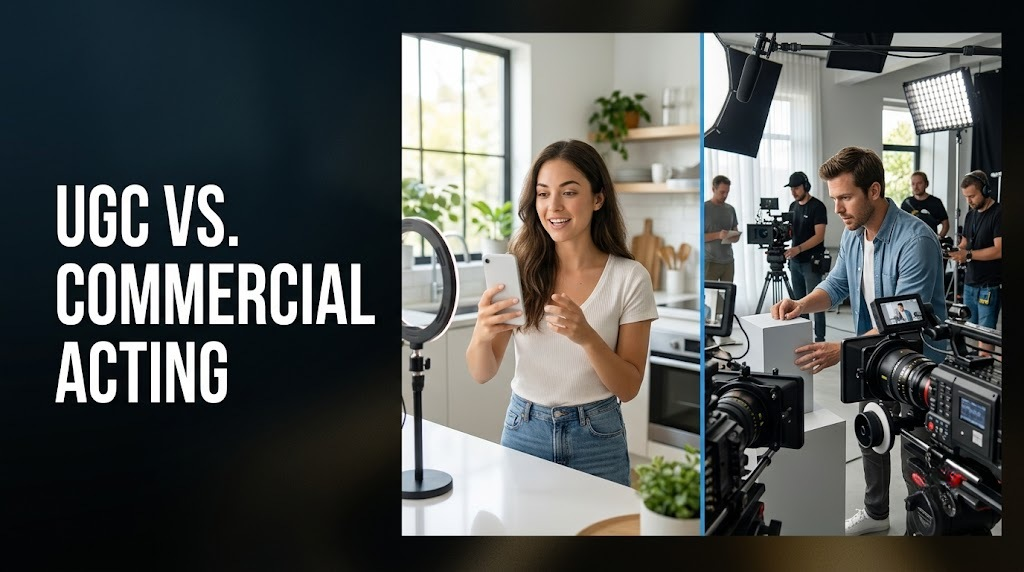
User-generated content (UGC) is promotional content designed to feel authentic, personal, and relatable.
In many campaigns, performers create videos that resemble everyday experiences rather than traditional advertisements.
The creative style often emphasizes authenticity and a natural presentation.
Understanding Commercial Acting
Commercial acting typically involves productions created by professional advertising teams.
These productions often include:
Directors.
Camera operators.
Lighting crews.
Hair and makeup artists.
Wardrobe professionals.
Production assistants.
Commercial actors perform within a structured production environment while helping communicate the campaign's creative message.
Different Production Styles
One of the biggest differences between UGC and commercial acting is how the content is produced.
UGC often features:
Casual visual styles.
Everyday environments.
Conversational delivery.
Creator-style presentation.
Commercial productions often include:
Professional film crews.
Cinematic lighting.
Multiple camera setups.
Planned production schedules.
Both approaches can be highly effective depending on the goals of the campaign.
Different Roles for Performers
Performers may contribute differently depending on the project.
UGC opportunities sometimes involve greater participation in presenting or creating content in a conversational style.
Commercial acting typically focuses on performing a role within a professionally produced advertisement under the direction of the creative team.
The exact responsibilities vary from one production to another.
Professional Skills Benefit Both Formats
Although the production process differs, many skills apply across both types of work.
Successful performers often demonstrate:
Authentic communication.
Adaptability.
Professionalism.
Strong on-camera presence.
Ability to follow creative direction.
Developing these skills supports opportunities across many areas of commercial performance.
Common Misconceptions About UGC and Commercial Acting
As user-generated content has become more common in advertising, many performers assume it is simply another name for commercial acting.
While both support marketing campaigns, they are different production formats with different creative approaches.
Here are a few common misconceptions.
UGC and Commercial Acting Are Exactly the Same
Both involve appearing on camera, but they often serve different creative purposes.
UGC is typically designed to feel like authentic, personal content created by an everyday consumer.
Commercial acting usually takes place within a professionally produced advertising environment with directors, production crews, and structured filming schedules.
Understanding the distinction helps performers prepare appropriately for each opportunity.
UGC Doesn't Require Acting Skills
Although UGC often appears casual, successful performances still rely on many acting fundamentals.
Performers benefit from:
Natural communication.
Active listening.
Authentic reactions.
Confidence on camera.
Adaptability.
Presenting information in a believable and engaging way remains an important skill.
Commercial Acting Always Looks Highly Polished
Many commercials use cinematic production techniques, but creative styles vary widely.
Some campaigns intentionally adopt a more natural or documentary-style appearance to connect with audiences.
The visual style depends on the campaign's creative goals rather than the production format alone.
You Must Choose One Career Path
Many performers work in both areas.
Depending on their interests and opportunities, actors may appear in:
Traditional commercials.
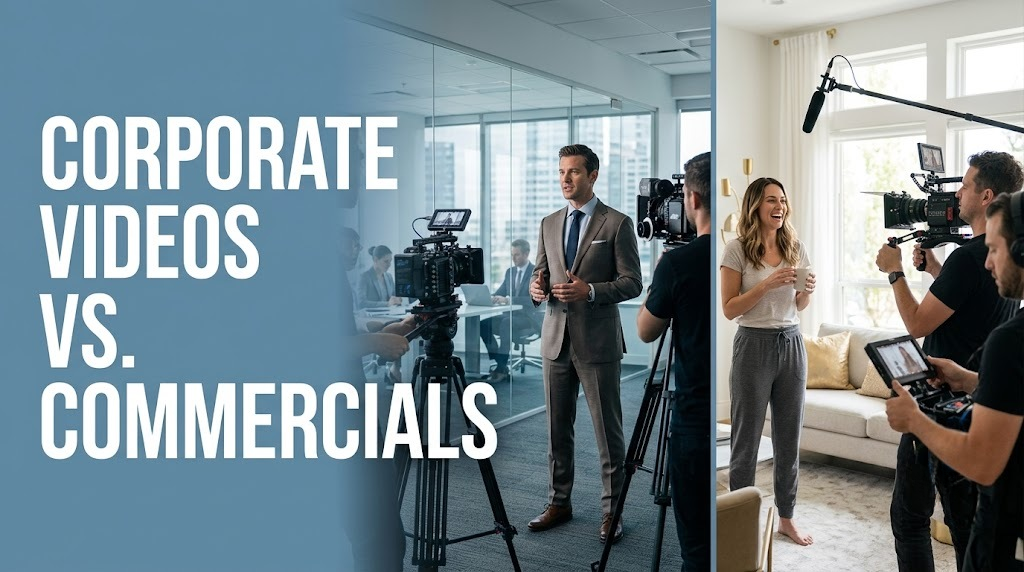
Corporate videos.
Branded content.
User-generated content.
Educational videos.
Building experience across multiple production styles can expand your professional opportunities.
Focus on the Creative Goals
Before accepting a project, take time to understand what the production is trying to achieve.
Consider questions such as:
Who is the intended audience?
What message is being communicated?
Should the performance feel conversational or cinematic?
What role does the performer play within the campaign?
How has the creative team described the project?
Understanding the campaign's objectives helps you deliver a performance that supports its vision.
Versatility Creates More Opportunities
The commercial industry continues to include a wide range of production styles.
Actors who remain flexible can develop experience across:
Commercial productions.
Corporate videos.
Branded campaigns.
User-generated content.
Digital advertising.
Versatility allows performers to adapt to changing creative needs while continuing to build valuable professional experience.
Frequently Asked Questions
Can actors work in both UGC and commercial productions?
Yes.
Many performers participate in a variety of commercial projects throughout their careers.
Developing adaptable on-camera skills can prepare you for opportunities across different production styles.
Do UGC projects always use smartphones?
Not necessarily.
Some user-generated content is filmed with smartphones, while other campaigns use professional cameras to recreate an authentic creator-style appearance.
The production approach depends on the campaign's creative vision.
Are auditions different for UGC projects?
The audition process varies.
Some projects request conversational self-tapes or sample content, while others follow more traditional commercial casting methods.
Always review the casting notice and submission instructions carefully.
Which format is better for new performers?
Neither format is inherently better.
Both UGC and commercial acting provide opportunities to build on-camera experience, strengthen communication skills, and develop professionally.
The best opportunity depends on your goals, experience, and the specific project.
Your Next Steps
Understanding the differences between UGC and commercial acting helps you evaluate opportunities with greater confidence.
As you continue building your commercial acting career:
Learn about different production formats.
Develop authentic on-camera communication.
Adapt your performance to each project's goals.
Continue strengthening your professional skills.
Stay open to a variety of commercial opportunities.
The more versatile you become, the better prepared you'll be to contribute to many different types of advertising and branded content productions.
Ready to put this into action?
Build your profile and start getting matched to real casting calls in your area.