Voice Acting Auditions Explained
Voice acting auditions rely entirely on your vocal performance. Learn what to expect, how to prepare, and how voice auditions differ from on-camera auditions.
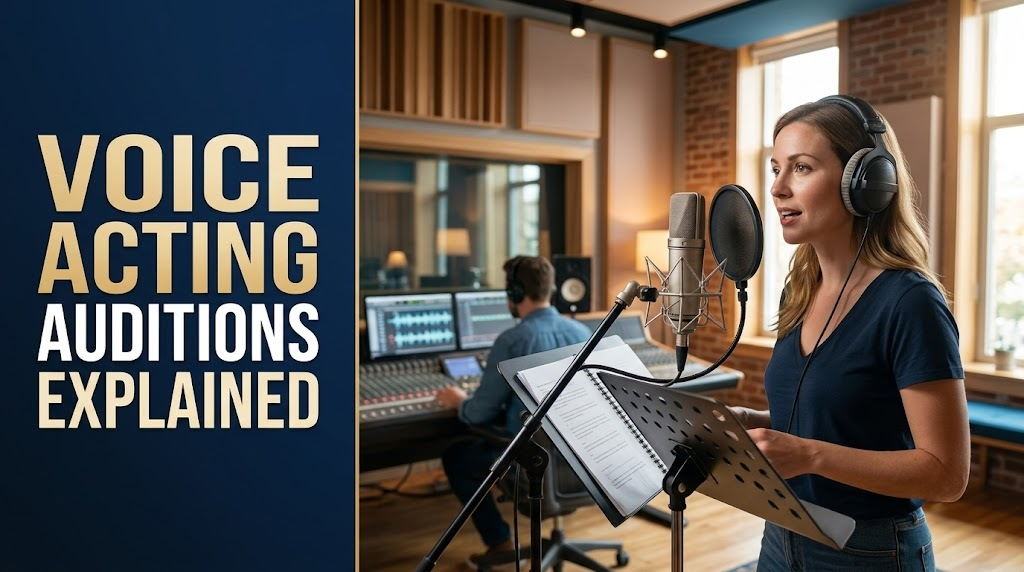
Voice acting auditions are different from most other types of acting auditions.
Instead of relying on facial expressions, body language, or movement, voice actors tell stories using only their voices.
Whether you're auditioning for an animated series, video game, audiobook, commercial, or corporate narration, your vocal performance becomes the primary focus.
That doesn't make voice acting easier.
In many ways, communicating emotion, personality, and intention using only your voice requires a unique set of skills.
In this guide, we'll explain how voice acting auditions typically work, what casting teams often evaluate, and how you can prepare for your next audition.
What Is a Voice Acting Audition?
A voice acting audition is the casting process used to select performers for projects that rely primarily on recorded vocal performances.
These projects may include:
- Animated television series.
- Animated films.
- Video games.
- Audiobooks.
- Radio commercials.
- Television and online commercials.
- Corporate narration.
- Podcasts and educational content.
Depending on the project, auditions may be recorded in a professional studio or submitted from a home recording setup.
What Happens During a Voice Acting Audition?
Every production follows its own process, but voice auditions often include:
- A brief vocal introduction.
- Reading from a prepared script.
- Multiple interpretations of the same copy.
- Direction from the casting team.
- Additional takes with different emotional approaches.
Many auditions are submitted as self-recorded audio files rather than performed live.
Your Voice Tells the Story
Without facial expressions or physical movement, your voice communicates everything.
Casting professionals often listen for:
- Emotional authenticity.
- Clear pronunciation.
- Natural pacing.
- Vocal variety.
- Character consistency.
The goal isn't simply reading the words correctly.
It's bringing the script to life through believable vocal storytelling.
Understand the Script Before Recording
Strong voice performances begin with thoughtful preparation.
Before recording, ask yourself:
- Who am I speaking to?
- What do I want?
- What emotion drives this scene?
- Why does this moment matter?
Understanding the context helps your delivery feel natural rather than mechanical.
Be Ready to Explore Different Reads
Voice directors frequently ask performers to record multiple versions of the same script.
For example, they may request:
- More energy.
- A calmer delivery.
- Greater warmth.
- Faster pacing.
- A completely different interpretation.
Flexibility demonstrates professionalism and gives the creative team more options during the casting process.
Microphone Technique Matters
Unlike on-camera auditions, voice acting auditions depend heavily on microphone technique.
While every studio setup is different, it's generally helpful to:
- Maintain a consistent distance from the microphone.
- Speak clearly without shouting.
- Minimize unnecessary movement.
- Avoid handling noisy paper during recording.
- Follow any recording instructions provided.
Good microphone technique allows your performance to be heard clearly without distracting sounds.
Recording From Home
Many voice acting auditions are now submitted remotely.
If you're recording from home, try to create the quietest environment possible.
Helpful practices include:
- Recording in a quiet room.
- Reducing background noise.
- Testing your equipment before recording.
- Listening back to your audio before submitting.
You don't necessarily need an expensive professional studio to begin auditioning, but clean, understandable audio is important.
Common Mistakes in Voice Acting Auditions
Voice acting requires a different mindset than on-camera performance.
Avoid these common mistakes.
Focusing Only on Voices
Many beginners believe voice acting is about creating unusual or exaggerated voices.
While character voices can be valuable for some projects, acting remains the foundation.
Focus first on storytelling, objectives, and believable emotion.
Reading Without Understanding
Simply reading the script aloud rarely creates an engaging performance.
Before recording, understand:
- Who your character is.
- Who they're speaking to.
- What they want.
- Why the moment matters.
Context helps your performance sound natural and connected.
Speaking Too Quickly
Nerves sometimes cause actors to rush through their copy.
Allow the script to breathe.
Clear pacing gives listeners time to understand both the words and the emotions behind them.
Ignoring Direction
If you're asked to record another version with a different tone or pacing, embrace the opportunity.
Casting professionals often want to hear how well you adapt to creative direction.
Flexibility is an important professional skill.
Frequently Asked Questions
Do I need professional recording equipment?
Not necessarily.
Many beginners start with simple home recording setups.
As your experience grows, you may choose to upgrade your equipment, but clean, intelligible audio is more important than owning the most expensive microphone.
Do voice acting auditions require memorization?
Usually not.
Many voice actors perform directly from the script while focusing on natural, expressive delivery.
Always follow the instructions included in the casting notice.
Can beginners audition for voice acting?
Yes.
Some projects welcome newcomers, while others may require previous experience or specific vocal skills.
Read each casting notice carefully to understand the project's expectations.
What are voice casting directors looking for?
Every project is different, but many voice casting teams value:
- Believable acting.
- Clear vocal delivery.
- Emotional authenticity.
- Adaptability.
- Professionalism.
The strongest auditions make listeners believe the character—not simply admire the voice.
Your Next Steps
Voice acting is storytelling through sound.
Whether you're recording a commercial, narrating an audiobook, or bringing an animated character to life, the same acting principles still apply.
As you continue developing your voice acting skills:
- Understand the script.
- Focus on truthful performances.
- Practice healthy vocal habits.
- Improve your recording quality.
- Stay open to creative direction.
Every voice audition helps you become a stronger storyteller and a more versatile performer.