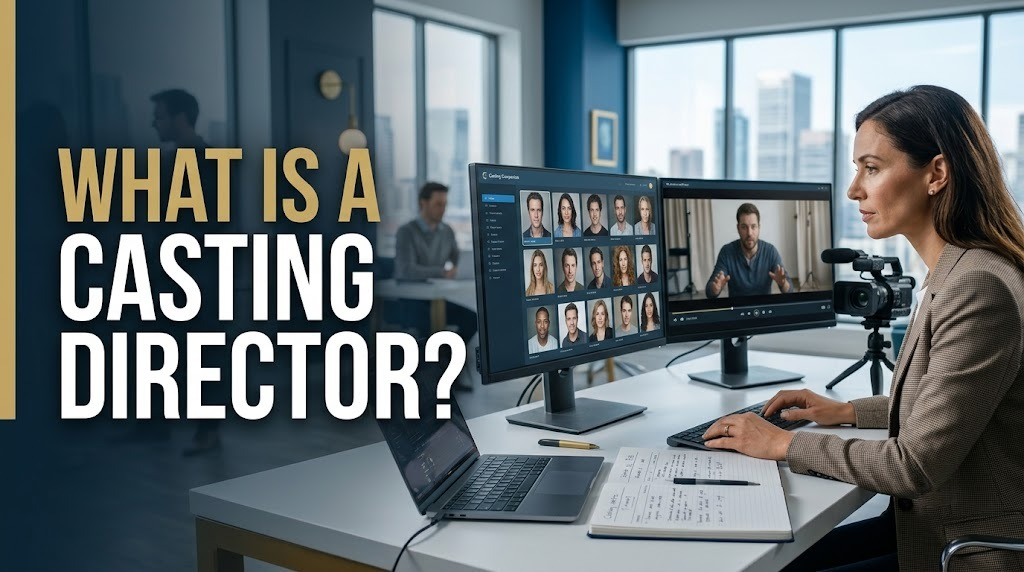
What Is a Casting Director?
Casting directors help identify the right actors for film and television productions. Learn what they do, how they work with productions, and what actors should know about the casting process.
Every film, television series, commercial, or streaming production begins with finding the right people to bring the story to life.
One of the professionals responsible for helping make that happen is the casting director.
If you're new to acting, you may hear the term frequently during auditions, workshops, and industry conversations. Understanding what a casting director does can help you better understand how productions assemble their casts and how actors fit into the casting process.
In this guide, we'll explain the role of a casting director, how they work with productions, and why they're an important part of the entertainment industry.
The Role of a Casting Director
A casting director is a creative professional responsible for helping identify and recommend actors for roles in a production.
Working closely with producers, directors, and other members of the production team, casting directors help organize the casting process from the earliest stages of pre-production through the selection of performers.
Their responsibilities often include:
- Reviewing scripts.
- Understanding character requirements.
- Organizing auditions.
- Reviewing self-tapes.
- Coordinating callback sessions.
- Presenting actor options to the production team.
Casting directors play an important role in helping productions discover performers who best match each role.
Casting Directors Collaborate With the Production Team
Although actors often interact directly with casting directors during auditions, casting directors are part of a much larger collaborative process.
Depending on the production, they may work closely with:
- Producers.
- Directors.
- Executive producers.
- Production companies.
- Talent representatives.
- Casting associates and assistants.
Together, these professionals evaluate potential performers while balancing creative, scheduling, and production needs.
How Casting Directors Manage the Audition Process
One of the most visible parts of a casting director's job is organizing and overseeing auditions.
Depending on the project, this may involve:
- Publishing casting notices.
- Reviewing submissions.
- Inviting actors to audition.
- Watching self-tapes.
- Scheduling callbacks.
- Coordinating chemistry reads or screen tests.
Their goal is to help productions efficiently evaluate performers while creating an organized casting process.
Casting Decisions Involve More Than Acting Ability
Strong acting is essential, but casting directors also consider many other factors.
These may include:
- Whether an actor fits the role.
- Overall ensemble chemistry.
- Production requirements.
- Scheduling availability.
- Age range and character needs.
- Physical continuity with other cast members.
Every casting decision supports the larger creative vision of the production.
Casting Directors Review Thousands of Submissions
Professional casting directors review an enormous number of submissions throughout the year.
For a single project, they may evaluate hundreds—or even thousands—of actors through:
- Casting profiles.
- Headshots.
- Resumes.
- Demo reels.
- Self-tapes.
- Live auditions.
This is one reason why maintaining professional marketing materials can make it easier for casting professionals to quickly evaluate your submission.
Common Misconceptions About Casting Directors
Actors who are new to the industry often misunderstand the role of a casting director.
Here are a few common misconceptions.
"Casting Directors Make Every Final Decision"
Casting directors play a major role in identifying and recommending actors, but casting decisions are typically collaborative.
Depending on the production, producers, directors, studio executives, or other decision-makers may also participate in selecting the final cast.
Casting directors help guide the process, but they are usually part of a larger team.
"Casting Directors Only Hire Famous Actors"
Professional productions cast performers at every stage of their careers.
Casting directors regularly review submissions from:
- Established actors.
- Emerging performers.
- Recent graduates.
- Working professionals.
- New talent.
Every project has different casting needs, and many productions actively seek actors who are the best fit for a role rather than the most recognizable name.
"One Audition Determines Your Entire Career"
Most actors audition many times throughout their careers.
Not booking one role doesn't mean a casting director won't remember you positively for future projects.
Professionalism, preparation, and consistent performances help build long-term professional relationships.
"Casting Directors Are Looking for Perfection"
Casting directors aren't searching for perfect performers.
They're looking for actors who authentically fit the needs of the production and bring believable performances to the characters they've been asked to portray.
Every project requires something different.
Building Positive Professional Relationships
Actors rarely interact with casting directors only once.
Throughout your career, you may audition for the same casting office many times across different productions.
A positive professional reputation is built through:
- Being prepared.
- Following audition instructions.
- Arriving on time.
- Treating everyone respectfully.
- Remaining professional regardless of the outcome.
Every interaction contributes to your reputation within the industry.
Frequently Asked Questions
Do casting directors choose the final cast?
Casting directors typically recommend actors and help organize the casting process, but final casting decisions are often made collaboratively with directors, producers, and other production decision-makers.
Do casting directors watch every self-tape?
Casting offices review a large number of submissions for each project.
The review process varies depending on the production, submission volume, and casting requirements, but casting teams work to identify performers who best match the needs of each role.
Can I audition for the same casting director more than once?
Absolutely.
Many actors audition for the same casting offices throughout their careers.
Professionalism, preparation, and consistent work help create positive long-term relationships.
Should I contact casting directors directly?
Always follow the submission instructions provided for each project.
Professional casting offices generally prefer actors to submit through the methods outlined in official casting notices or through their representation when applicable.
Your Next Steps
Understanding the role of a casting director helps you better understand how the casting process works from the production's perspective.
As you continue developing your acting career:
- Learn how professional casting offices operate.
- Prepare thoroughly for every audition.
- Maintain professional marketing materials.
- Treat every interaction with professionalism.
- Focus on building long-term relationships rather than individual bookings.
Casting directors play an important role in connecting actors with opportunities, and understanding their responsibilities can help you navigate the industry with greater confidence.