What Is a Chemistry Read?
Being invited to a chemistry read is an exciting milestone. Learn what chemistry reads are, why they matter, and how to prepare for this important step in the casting process.
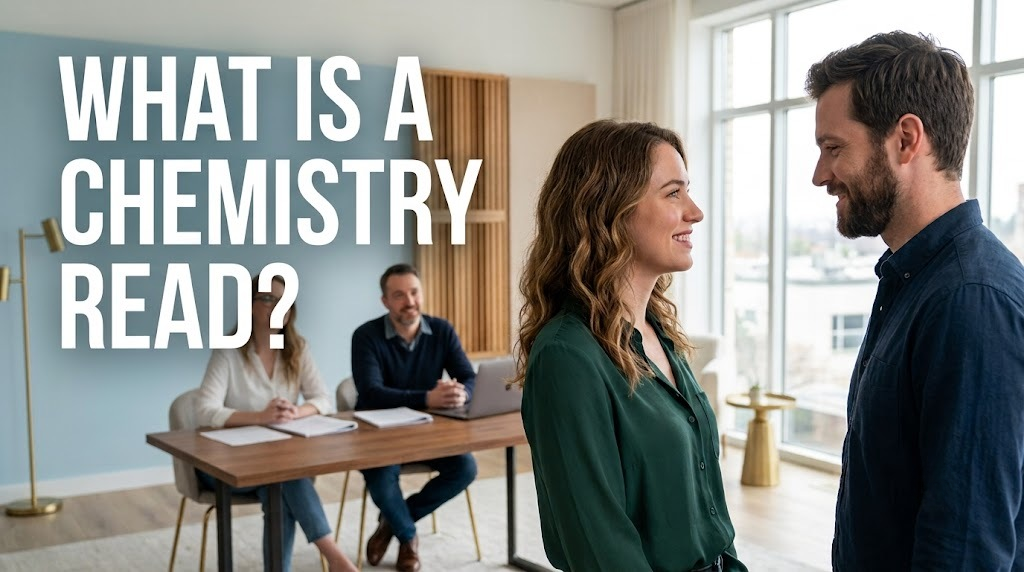
Receiving an invitation to a chemistry read is an exciting moment for many actors.
If you've never experienced one before, you might wonder what makes it different from a regular audition.
A chemistry read is typically one of the final stages of the casting process.
Instead of evaluating your performance alone, the creative team wants to see how well you interact with another actor on screen.
This stage is especially common for projects where believable relationships are essential to the story.
Whether the characters are romantic partners, close friends, siblings, or family members, strong chemistry can make a performance feel natural and convincing.
In this guide, we'll explain what a chemistry read is, why productions use them, and how you can approach one with confidence.
What Is a Chemistry Read?
A chemistry read is a casting session where two or more actors perform scenes together so the creative team can evaluate how naturally they work as a pair.
Unlike a standard audition, where you're primarily evaluated as an individual performer, a chemistry read focuses on the relationship between the actors.
Casting directors may already know that each actor performs well independently.
The remaining question is whether those performances feel believable together.
Why Are Chemistry Reads Important?
Some stories depend heavily on the connection between characters.
Even highly talented actors may create very different dynamics depending on who they're performing with.
Chemistry reads help the creative team evaluate:
- Natural interaction.
- Emotional connection.
- Believable relationships.
- Timing.
- Comfort working together.
- Overall compatibility within the cast.
These sessions help directors make informed casting decisions before production begins.
What Types of Projects Use Chemistry Reads?
Chemistry reads are common in productions where relationships play an important role.
Examples include:
- Feature films.
- Television series.
- Streaming productions.
- Romantic comedies.
- Family dramas.
- Teen dramas.
- Some commercials featuring couples or families.
Not every production includes chemistry reads, but they're often used when relationships are central to the story.
What Happens During a Chemistry Read?
Although every production follows its own process, many chemistry reads include:
- Performing one or more scripted scenes.
- Reading with another shortlisted actor.
- Trying different emotional approaches.
- Receiving direction from the creative team.
- Multiple scene partners throughout the session.
The atmosphere is often collaborative, allowing directors to explore different combinations before making a final decision.
Remember: You're Not Competing With Your Scene Partner
A chemistry read isn't about outperforming the other actor.
In fact, the opposite is true.
Casting directors want to see whether both performers support one another and create believable interactions.
The strongest chemistry often comes from actors who:
- Listen carefully.
- Stay emotionally present.
- Respond truthfully.
- Focus on the relationship instead of themselves.
Strong collaboration usually creates stronger performances.
Be Yourself—Not What You Think They Want
It's natural to want to impress the casting team during a chemistry read.
However, trying to force chemistry or change your performance to match another actor usually has the opposite effect.
Instead:
- Stay connected to your character.
- Listen carefully.
- Respond honestly.
- Allow the relationship to develop naturally.
Authentic interaction is far more convincing than manufactured chemistry.
Expect to Read With Different Actors
During some chemistry reads, you may perform the same scene with several different actors.
This allows the director to compare different pairings before making a final decision.
Remember that each pairing may create a completely different dynamic.
Don't assume one performance is "better" than another.
The goal is to discover which combination best serves the story.
Chemistry Reads Are Collaborative
Unlike many auditions, a chemistry read isn't about proving you're the strongest individual performer.
The creative team wants to know whether two actors elevate each other's performances.
Strong chemistry often comes from actors who:
- Support one another.
- Stay present in the moment.
- Adapt naturally.
- Create believable emotional connections.
- Focus on the relationship rather than themselves.
Great collaboration often leaves the strongest impression.
Common Mistakes During a Chemistry Read
Chemistry reads can feel exciting, but they also present unique challenges.
Here are a few common mistakes to avoid.
Trying Too Hard to Create Chemistry
Chemistry can't be forced.
Instead of attempting to manufacture a connection, stay committed to your character and respond honestly to your scene partner.
Natural interactions usually feel more believable.
Competing With Your Scene Partner
Your goal isn't to outshine the other actor.
A chemistry read succeeds when both performers create a relationship that supports the story.
Approach the session as a collaboration rather than a competition.
Ignoring Direction
Directors may ask you to adjust the relationship, emotional tone, or pacing of the scene.
Remain open to trying different approaches.
Your adaptability is part of what they're evaluating.
Focusing Only on Romantic Chemistry
Not every chemistry read involves romantic characters.
Productions may evaluate relationships between:
- Parents and children.
- Siblings.
- Friends.
- Coworkers.
- Mentors and students.
The objective is always the same—creating believable relationships.
Frequently Asked Questions
Does being invited to a chemistry read mean I'm close to being cast?
Often, yes.
Chemistry reads typically occur later in the casting process after the creative team has narrowed its list of potential actors.
However, every production follows its own process, so there are no guarantees.
Do I need to prepare differently?
Prepare the same way you would for any important audition.
Understand your character, know the script, stay emotionally present, and remain flexible if you're given direction.
What if I don't feel chemistry with the other actor?
Don't try to force it.
Focus on listening, responding honestly, and staying committed to the scene.
The casting team understands that different pairings naturally create different dynamics.
Can chemistry reads happen over self-tape or video call?
Sometimes.
While many chemistry reads take place in person, some productions use virtual sessions or remote recordings, particularly when actors are in different locations.
Your Next Steps
A chemistry read is an opportunity to demonstrate something that's difficult to measure in a standard audition—your ability to build believable relationships with other performers.
If you're invited to one:
- Trust your preparation.
- Stay present.
- Listen carefully.
- Support your scene partner.
- Allow authentic connections to develop naturally.
Strong chemistry isn't about trying harder.
It's about creating truthful moments together.