Working With Directors
Learn how actors collaborate with directors, respond to creative direction, and build professional working relationships on film and television sets.
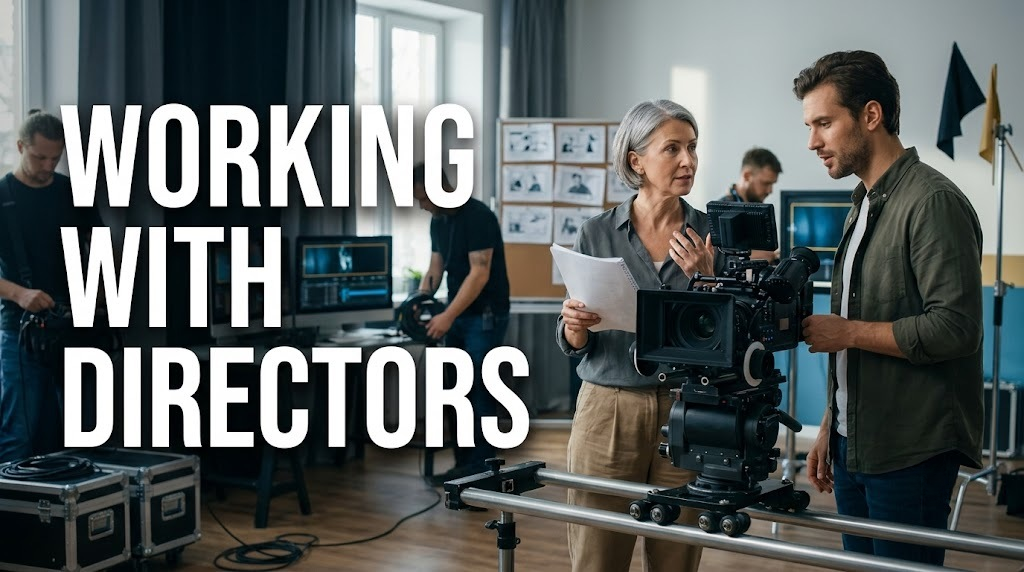
Every film and television production is built on collaboration.
Among the many creative relationships actors develop throughout their careers, one of the most important is the relationship with the director.
Directors help guide performances, shape the story, and coordinate the creative vision shared by the entire production team.
Understanding how to work effectively with directors can help actors communicate professionally, adapt to creative feedback, and contribute to a productive filming environment.
In this guide, we'll explore how directors work with actors and how strong collaboration benefits everyone involved in the production.
Understanding the Director's Role
Directors oversee the creative execution of a production.
They work closely with actors and department heads to help ensure that performances, camera work, pacing, and storytelling support the overall vision of the project.
Depending on the production, directors may:
- Discuss character motivations.
- Guide performances.
- Coordinate rehearsals.
- Work with camera and crew departments.
- Make creative decisions throughout filming.
While every director has a unique working style, their primary goal is to help bring the story to life.
Collaboration Creates Better Performances
Acting is a collaborative process.
Rather than working independently, actors and directors communicate throughout rehearsals and filming to develop performances that best serve the story.
Effective collaboration often involves:
- Listening carefully.
- Asking thoughtful questions when appropriate.
- Remaining open to new ideas.
- Adjusting performances as needed.
- Supporting the creative process.
Working together allows everyone to contribute their expertise toward the same goal.
Responding to Direction Professionally
Receiving direction is a normal part of every production.
A director may ask for adjustments related to:
- Emotional intensity.
- Character objectives.
- Physical movement.
- Pacing.
- Timing.
- Scene dynamics.
Approaching feedback with professionalism and flexibility allows actors to adapt confidently while maintaining a positive working relationship.
Every Director Has a Different Style
No two directors approach filmmaking in exactly the same way.
Some may provide detailed performance notes, while others encourage actors to explore scenes with greater independence.
Being adaptable helps actors work successfully with different creative styles throughout their careers.
Remaining open to each director's process supports productive collaboration.
Preparation Supports Collaboration
Directors rely on actors who arrive prepared.
Knowing your material before arriving on set allows rehearsals and filming to focus on refining the performance rather than learning the basics.
Preparation often includes:
- Studying the script.
- Understanding your character.
- Learning dialogue.
- Reviewing production notes.
- Arriving ready to work.
Good preparation creates more opportunities for meaningful creative collaboration.
Common Misconceptions About Working With Directors
Actors who are new to professional productions sometimes misunderstand how directors and actors work together.
Here are a few common misconceptions.
Directors Want Every Performance to Be Exactly the Same
Not necessarily.
Many directors encourage actors to bring thoughtful choices to their performances while ensuring those choices support the story.
The level of collaboration varies depending on the production and the director's creative approach.
Receiving Notes Means You Did Something Wrong
Creative feedback is a normal part of filmmaking.
Directors often adjust performances to better serve the scene, improve continuity, or strengthen the overall story.
Receiving notes is simply part of the collaborative process and should be viewed as an opportunity to refine your performance.
You Should Never Ask Questions
Thoughtful questions can be helpful when they clarify the scene, character, or direction.
Choose appropriate moments to ask, listen carefully to the answers, and avoid interrupting the production workflow.
Professional communication supports efficient collaboration.
Every Director Works the Same Way
Each director brings a unique creative process to a production.
Some provide detailed performance guidance, while others allow actors greater freedom to explore a scene.
Being adaptable helps actors build positive working relationships across a variety of productions.
Communication Builds Trust
Strong working relationships are built on clear and respectful communication.
Actors can help create a positive environment by:
- Listening carefully.
- Remaining open to feedback.
- Responding professionally.
- Asking questions when appropriate.
- Respecting production schedules.
- Supporting fellow cast members.
Trust develops through consistent professionalism and collaboration.
Focus on Serving the Story
Successful collaborations are centered on the needs of the story rather than individual performances.
When actors and directors share that focus, creative decisions become easier to evaluate.
Instead of asking, "Is this my best moment?" it can be more helpful to consider:
- Does this support the scene?
- Does it fit the character?
- Does it help tell the story?
- Does it work with the other performances?
Keeping the story at the center of the creative process strengthens the production as a whole.
Frequently Asked Questions
What should I do if I receive new direction during filming?
Listen carefully, ask for clarification if needed, and adjust your performance based on the director's guidance.
Changes during filming are a normal part of the production process.
Is it okay to offer creative ideas?
Some directors welcome collaborative discussion, while others prefer to lead creative decisions in different ways.
Pay attention to the working style of the production and communicate respectfully when appropriate.
What if I don't understand a note?
It's perfectly acceptable to politely ask for clarification.
Understanding the director's intention helps you respond more effectively and supports better collaboration.
How can I build a good relationship with a director?
Preparation, professionalism, adaptability, and respectful communication all contribute to positive working relationships.
Consistently demonstrating these qualities helps build trust over time.
Your Next Steps
Working effectively with directors is one of the most valuable professional skills an actor can develop.
As you continue working on productions:
- Arrive prepared.
- Listen carefully to creative direction.
- Stay flexible throughout filming.
- Communicate respectfully.
- Focus on serving the story.
Strong collaboration allows actors and directors to work together toward a shared creative vision while creating an environment where everyone can do their best work.