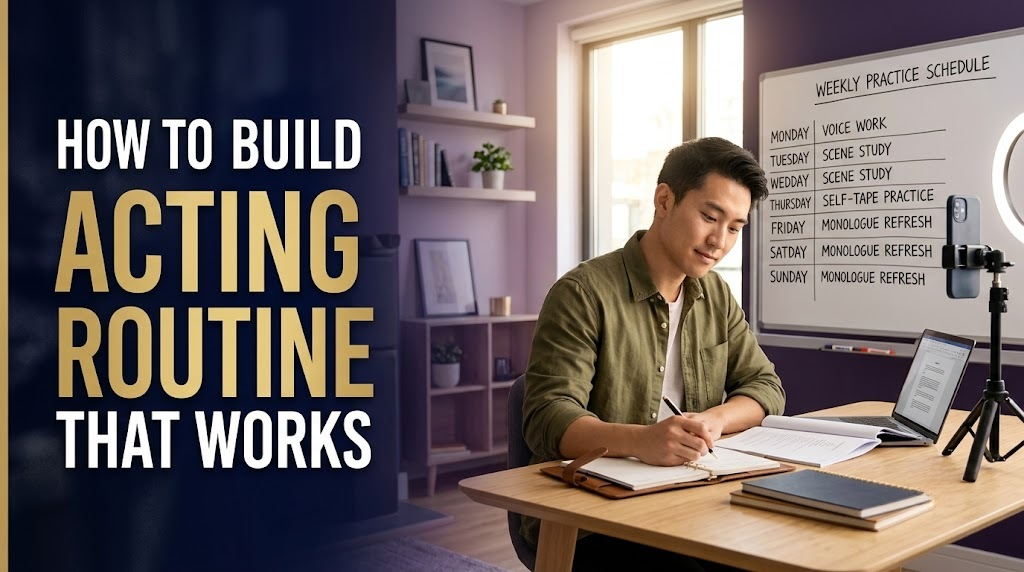
How to Build an Acting Routine That Works
Success in acting doesn't come from occasional inspiration—it comes from consistent practice. Learn how to create an acting routine that fits your schedule and helps you continue improving.
Many beginner actors believe improvement only happens during auditions or acting classes.
In reality, much of an actor's growth happens between auditions.
Professional actors don't wait until they're cast to work on their craft.
Instead, they develop routines that allow them to practice consistently, strengthen their skills, and stay prepared for future opportunities.
The good news is that your acting routine doesn't have to consume hours every day.
A realistic routine that fits your lifestyle is often easier to maintain than an ambitious schedule you'll struggle to follow.
In this guide, you'll learn how to build an acting routine that supports steady progress and keeps you ready for your next audition.
Why Consistency Matters
Acting is a skill that develops over time.
Like learning a musical instrument or a new language, regular practice produces better results than occasional intensive sessions.
A consistent routine helps you:
- Build confidence.
- Improve memorization.
- Develop stronger performances.
- Stay audition-ready.
- Continue learning between opportunities.
Small, regular improvements often produce the greatest long-term growth.
Start With a Realistic Schedule
One of the biggest mistakes beginners make is creating routines that are impossible to maintain.
Instead of committing to several hours every day, start with manageable practice sessions.
For example:
- 20–30 minutes after work.
- One hour on weekends.
- Three or four practice sessions each week.
A routine you can maintain consistently is far more valuable than one you abandon after a few days.
Include Different Types of Practice
A balanced acting routine keeps your skills developing in multiple areas.
Your weekly practice might include:
- Reading scripts.
- Practicing monologues.
- Recording self-tapes.
- Watching professional performances.
- Character analysis.
- Voice and diction exercises.
Variety keeps practice interesting while helping you become a more versatile performer.
Set Clear Goals
Practicing without a goal can make it difficult to measure progress.
Instead, choose one or two specific objectives for each session.
For example:
- Memorize one new page of dialogue.
- Improve eye contact.
- Practice emotional transitions.
- Record a stronger self-tape.
- Learn a new acting technique.
Clear goals help every practice session feel purposeful.
Keep Track of Your Progress
Consider keeping an acting journal.
After each practice session, write down:
- What you practiced.
- What improved.
- What felt challenging.
- Goals for your next session.
Looking back over several weeks can help you recognize progress that might otherwise go unnoticed.
Make Time for Voice and Body Work
Acting isn't only about delivering lines.
Your voice and body are essential performance tools, and they benefit from regular practice.
Include simple exercises such as:
- Vocal warm-ups.
- Breathing exercises.
- Stretching.
- Posture practice.
- Articulation drills.
Just a few minutes before each practice session can improve your control, clarity, and confidence.
Watch and Learn From Great Performances
Watching experienced actors can be as valuable as practicing yourself.
As you watch films, television series, or stage performances, pay attention to:
- How actors listen to one another.
- Subtle facial expressions.
- Vocal delivery.
- Physical movement.
- Emotional transitions.
Instead of trying to imitate another performer, focus on understanding the choices they make and why those choices support the story.
Be Flexible With Your Routine
Life doesn't always go according to plan.
Missing a practice session doesn't mean you've failed.
The goal is consistency over time, not perfection.
If you miss a day, simply return to your routine as soon as you can.
Long-term progress comes from building habits you can maintain for months and years.
Stay Motivated
Every actor experiences periods when motivation feels low.
During those times, remind yourself why you started acting.
You can also stay motivated by:
- Setting small monthly goals.
- Trying new monologues.
- Joining an acting class.
- Working with a scene partner.
- Celebrating your progress.
Momentum often returns once you begin practicing again.
Common Routine Mistakes
Building a routine is one thing. Sticking with it is another.
Avoid these common pitfalls.
Trying to Do Too Much
An overly ambitious routine can quickly become overwhelming.
Start small and increase your practice time gradually as the habit becomes part of your schedule.
Practicing the Same Thing Every Day
Repeating the same exercise over and over can slow your development.
Keep your routine balanced by rotating different skills throughout the week.
Waiting for Inspiration
Some days you'll feel excited to practice.
Other days you won't.
Successful actors don't rely only on motivation—they rely on consistency.
Even a short practice session is better than skipping entirely.
Forgetting to Rest
Improvement happens through both practice and recovery.
Give yourself time to recharge so you can return to your work with energy and focus.
Frequently Asked Questions
How often should I practice acting?
Aim for several focused practice sessions each week.
Even 20–30 minutes per session can make a meaningful difference when practiced consistently.
Do I need to practice every day?
Not necessarily.
The best routine is one you can realistically maintain over the long term.
Consistency is more important than frequency.
What if I don't have auditions?
That's actually one of the best times to practice.
Working on your craft between auditions helps you stay prepared for future opportunities.
Can I build an acting routine without taking classes?
Yes.
While acting classes provide valuable instruction and feedback, you can still make significant progress through script study, self-tapes, monologues, observation, and regular practice.
Your Next Steps
A successful acting career is built one practice session at a time.
Creating a routine that fits your lifestyle will help you continue improving, even when you aren't actively auditioning.
As you build your routine:
- Keep your schedule realistic.
- Practice a variety of skills.
- Track your progress.
- Stay consistent.
- Continue learning.
Small daily improvements often lead to remarkable long-term growth.