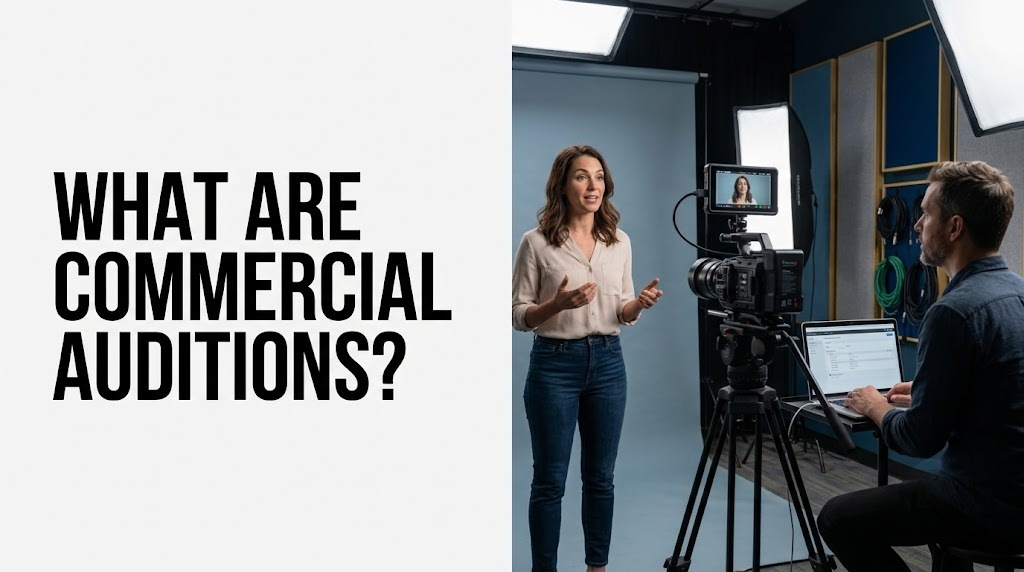
Commercial auditions are often the first step toward booking roles in television advertisements, online campaigns, branded content, and other advertising productions.
Although every audition is unique, the goal remains the same: helping the casting team determine whether an actor is a good fit for the role and the overall campaign.
Unlike many dramatic auditions, commercial auditions frequently focus on authenticity, personality, and the ability to communicate naturally on camera.
Understanding how commercial auditions work can help actors feel more prepared and confident throughout the casting process.
In this guide, you'll learn what happens during commercial auditions, what casting professionals typically evaluate, and how to prepare for your next opportunity.
The Purpose of a Commercial Audition
A commercial audition allows casting professionals to evaluate how an actor fits the creative vision of an advertising campaign.
The goal isn't to find a "perfect" actor but to identify performers who best support the project's message and audience.
Every Commercial Is Different
Commercial auditions vary depending on the campaign.
Some auditions involve only a short scene, while others may include:
Simple conversations.
Everyday activities.
Improvised interactions.
Product demonstrations.
Lifestyle moments.
Group auditions.
The format depends on the creative needs of the production.
Authenticity Is Often the Priority
Commercial performances frequently aim to feel genuine rather than theatrical.
Casting directors often look for actors who can present believable reactions and natural conversations that audiences can relate to.
Rather than trying to appear overly polished, focus on communicating honestly within the context of the scene.
Authenticity helps audiences connect with both the performance and the campaign.
Following Direction Is an Important Skill
Commercial auditions often include adjustments after the first read.
A casting director may ask you to:
Change your energy.
Slow your pacing.
Try a different approach.
Emphasize a different emotion.
Interact differently with another performer.
Responding professionally and adapting to direction demonstrates flexibility and collaboration.
Preparation Builds Confidence
Although commercial auditions may appear relaxed, preparation remains important.
Before your audition:
Read the audition instructions carefully.
Learn about the role if information is provided.
Practice natural delivery.
Prepare your wardrobe if requested.
Arrive on time or submit self-tapes before the deadline.
Preparation allows you to focus on your performance instead of last-minute details.
Common Misconceptions About Commercial Auditions
Actors who are new to commercial casting often have misconceptions about what casting teams are looking for.
Here are a few common ones.
You Need to Be Overly Energetic
Many new actors assume every commercial requires exaggerated enthusiasm.
In reality, the appropriate energy depends on the campaign.
Some advertisements call for excitement, while others are calm, conversational, or emotional.
The goal is to match the tone of the project rather than delivering the same style in every audition.
Memorizing Every Word Is the Only Priority
Knowing your dialogue is helpful, but commercial auditions also evaluate how naturally you communicate.
Casting directors often look for performances that feel believable rather than overly rehearsed.
Being present in the moment is just as important as remembering the words.
There's Only One Correct Way to Perform the Scene
Commercial auditions rarely have a single "perfect" interpretation.
Different actors may bring different personalities, pacing, and emotional qualities to the same script.
Casting decisions depend on how well an actor fits the creative vision of that particular campaign.
Receiving New Direction Means Your First Read Was Wrong
It's common for casting directors to offer adjustments after an initial performance.
These changes aren't necessarily corrections.
Instead, they help the creative team explore different possibilities and evaluate how well an actor responds to direction.
Being adaptable is an important part of the audition process.
Professional Habits Make a Difference
Although your performance is important, professionalism also helps create a positive impression.
During commercial auditions:
Arrive on time or submit materials before the deadline.
Follow all audition instructions carefully.
Dress appropriately for the role when requested.
Listen attentively to direction.
Maintain a positive and professional attitude.
These habits help demonstrate that you're prepared to work on a professional production.
Every Audition Is Valuable Experience
Not every audition leads to a booking, but every opportunity allows you to continue developing as an actor.
Commercial auditions help you:
Build confidence in front of the camera.
Practice taking direction.
Improve your on-camera communication.
Gain experience with different audition formats.
Strengthen your professional skills.
Each audition contributes to your long-term growth, regardless of the outcome.
Frequently Asked Questions
Do I need acting experience to attend a commercial audition?
Requirements vary depending on the production.
Some campaigns seek experienced actors, while others welcome performers who naturally match the role being cast.
Review the casting notice carefully before submitting.
Will I always receive a script before the audition?
Not always.
Some auditions provide scripts in advance, while others distribute materials shortly before the audition or ask performers to improvise simple situations.
Follow the instructions provided by the casting team.
Can commercial auditions be self-taped?
Yes.
Many commercial auditions are conducted through self-tape submissions, while others take place in person or live online.
The format depends on the needs of the production.
What should I do if I receive an adjustment during the audition?
Listen carefully, stay flexible, and apply the direction as naturally as possible.
Casting professionals often use adjustments to see how actors collaborate and adapt—not because the first performance was unsuccessful.
Your Next Steps
Commercial auditions are an opportunity to show more than your acting ability—they also demonstrate your professionalism, adaptability, and communication skills.
As you prepare for future auditions:
Read every casting notice carefully.
Practice authentic, conversational performances.
Stay open to creative adjustments.
Follow all audition instructions.
Treat every audition as a valuable learning experience.
Confidence grows through preparation, experience, and a willingness to keep improving with every opportunity.
Ready to put this into action?
Build your profile and start getting matched to real casting calls in your area.