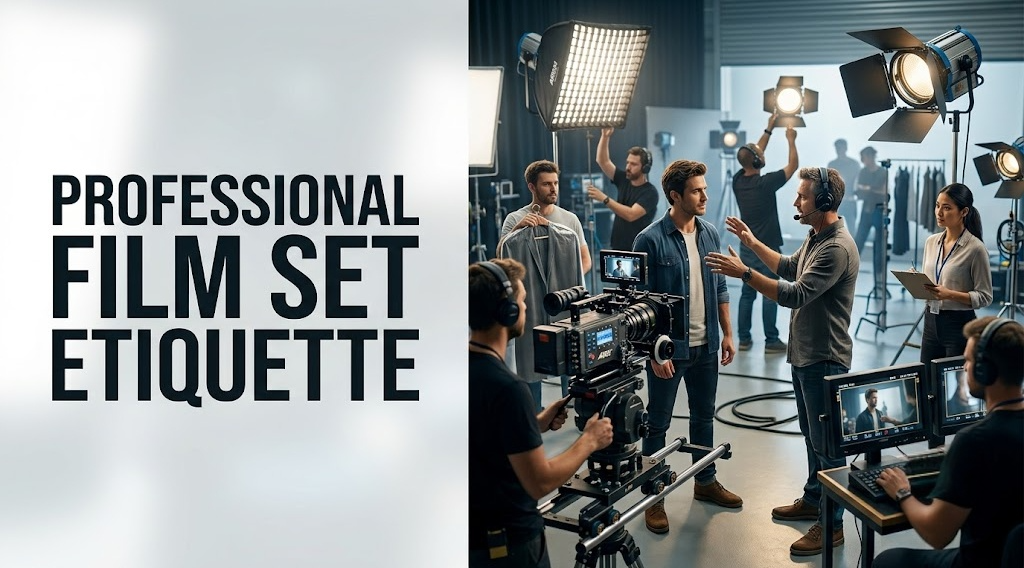
Learn professional film set etiquette, including preparation, communication, teamwork, and the habits that help actors build strong reputations on set.
Professionalism is one of the most valuable qualities an actor can bring to any production.
While talent helps create memorable performances, professional behavior helps productions operate smoothly and encourages positive working relationships with directors, cast, and crew.
Film sets are collaborative environments where clear communication, preparation, and mutual respect allow hundreds of people to work together toward the same creative goal.
Understanding professional film set etiquette helps actors feel more confident while contributing to a productive and respectful workplace.
In this guide, you'll learn the professional habits and on-set behaviors that help actors build strong reputations throughout their careers.
Professionalism Begins Before You Arrive
Good film set etiquette starts long before filming begins.
Being prepared reduces unnecessary stress and allows the production to begin efficiently.
Respect Every Department
Film productions rely on collaboration across many specialized departments.
Actors regularly work alongside:
Directors.
Assistant directors.
Camera crews.
Lighting technicians.
Sound departments.
Hair and makeup artists.
Costume professionals.
Production assistants.
Treating every member of the production with courtesy and respect contributes to a positive working environment.
Listen Before You Act
Clear communication is essential on professional film sets.
Actors should:
Listen carefully to instructions.
Wait for direction when appropriate.
Ask respectful questions if clarification is needed.
Avoid making assumptions.
Stay attentive throughout the production day.
Careful listening helps reduce misunderstandings and supports efficient collaboration.
Stay Ready Throughout the Day
Film productions often alternate between periods of preparation and active filming.
Even while waiting, actors should remain ready to work by:
Staying aware of production updates.
Remaining near assigned areas.
Keeping costumes and props in good condition.
Maintaining focus between takes.
Being prepared allows the production to move efficiently when it's time to film.
Small Habits Build Strong Reputations
Professional reputations develop through consistent everyday actions.
Simple habits such as:
Being dependable.
Following instructions.
Communicating respectfully.
Staying positive.
Remaining adaptable.
can leave lasting impressions that extend beyond a single production.
Common Misconceptions About Film Set Etiquette
Actors who are new to professional productions sometimes assume etiquette is simply about being polite.
In reality, professional film set etiquette also includes communication, preparation, reliability, and respect for everyone's role on the production.
Here are a few common misconceptions.
Etiquette Only Matters for Lead Actors
Professional behavior is expected from everyone on set.
Whether you're working as a background performer, day player, supporting actor, or lead, your professionalism contributes to the overall production environment.
Every member of the cast and crew helps create a respectful workplace.
Talent Is More Important Than Professionalism
Talent is valuable, but productions also depend on people who are dependable, prepared, and easy to work with.
Professional habits such as arriving on time, following instructions, and communicating respectfully help productions operate efficiently and can leave a lasting positive impression.
It's Better to Guess Than Ask Questions
If you're unsure about an instruction, politely asking the appropriate member of the production team is usually the best approach.
Clear communication helps prevent misunderstandings and allows everyone to work more effectively.
Thoughtful questions are often better than incorrect assumptions.
Professionalism Only Matters During Filming
Professional expectations apply throughout the entire production day.
Actors are expected to demonstrate respect and professionalism during:
Check-in.
Wardrobe fittings.
Hair and makeup.
Holding.
Rehearsals.
Filming.
Wrap.
Every interaction contributes to your professional reputation.
Building a Reputation People Remember
The entertainment industry is highly collaborative, and many professionals work together across multiple productions.
Actors who consistently demonstrate professionalism are often remembered for qualities such as:
Reliability.
Preparation.
Respect.
Adaptability.
Positive communication.
Teamwork.
A strong reputation is built through consistent actions over time.
Courtesy Strengthens Collaboration
Simple acts of courtesy help create a productive environment for everyone.
Examples include:
Greeting cast and crew professionally.
Respecting shared workspaces.
Following production procedures.
Being patient during technical setups.
Showing appreciation for others' contributions.
These habits support positive working relationships throughout the production.
Frequently Asked Questions
What should I do if I'm unsure about something on set?
Ask the appropriate member of the production team for clarification.
Clear communication helps prevent misunderstandings and demonstrates professionalism.
Is punctuality really that important?
Yes.
Film productions operate on carefully planned schedules, and arriving on time helps every department stay on track.
Being punctual is one of the simplest ways to demonstrate professionalism.
Should I introduce myself to cast and crew?
When appropriate, friendly and respectful introductions can help build positive working relationships.
Be mindful that crew members are often focused on preparing for filming, so choose appropriate moments.
Can professional behavior influence future opportunities?
A positive reputation for professionalism, preparation, and collaboration can contribute to strong working relationships throughout your career.
While no behavior guarantees future work, being dependable and respectful is valued across the industry.
Your Next Steps
Professional film set etiquette is about more than following rules—it's about contributing to an environment where everyone can do their best work.
As you continue your acting career:
Arrive prepared for every production.
Communicate respectfully with cast and crew.
Stay attentive throughout the filming day.
Remain adaptable as production needs change.
Treat every opportunity with professionalism.
The habits you develop today can help you build lasting professional relationships and contribute to successful productions throughout your career.
Ready to put this into action?
Build your profile and start getting matched to real casting calls in your area.