What Makes a Great Acting Headshot?
A great acting headshot does more than look professional—it tells casting directors who you are. Learn the essential elements that make an actor's headshot effective.
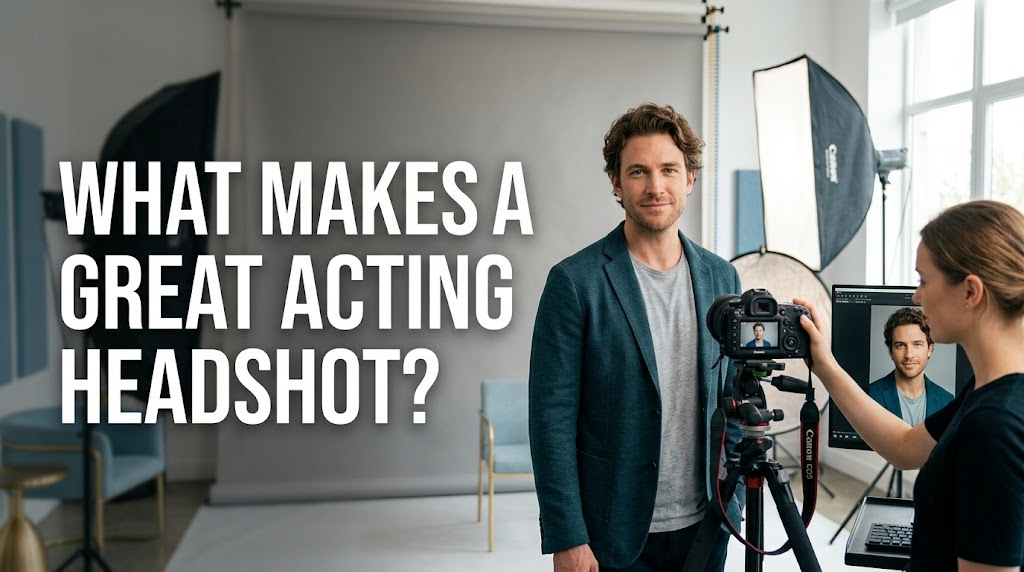
Not all professional headshots are equally effective.
A technically beautiful photograph isn't always the best acting headshot.
Casting directors aren't looking for fashion photography or glamour portraits.
They're looking for an authentic representation of the person they may invite to audition.
A great acting headshot immediately communicates who you are while allowing casting professionals to imagine you in a variety of roles.
In this guide, we'll explore the characteristics that make an acting headshot successful and why authenticity is often more valuable than perfection.
Authenticity Comes First
The most effective acting headshots feel genuine.
Rather than trying to create an exaggerated version of yourself, your headshot should accurately represent your current appearance and personality.
Authenticity allows casting professionals to quickly understand who they'll meet if they invite you to audition.
An authentic headshot helps create trust before you ever enter the audition room.
Your Eyes Tell the Story
One of the first things people notice in a strong headshot is the eyes.
They should appear:
- Engaged.
- Relaxed.
- Confident.
- Present.
- Natural.
Eye contact helps create a sense of connection without appearing forced.
Many experienced headshot photographers spend significant time helping actors achieve authentic expressions because subtle differences can dramatically change how an image feels.
Expression Should Feel Natural
A great acting headshot doesn't require a large smile or dramatic emotion.
Instead, your expression should match your natural personality and casting type.
Whether your look is friendly, thoughtful, confident, or serious, the expression should never appear overly posed.
Natural expressions often create the strongest first impression.
Lighting Should Support You
Good lighting helps highlight your natural features without becoming distracting.
Professional acting headshots typically use lighting that is:
- Soft.
- Even.
- Flattering.
- Natural-looking.
The goal isn't to create dramatic visual effects.
It's to keep the attention on your face and expression.
Simplicity Keeps the Focus on You
Great acting headshots rarely include distracting backgrounds or elaborate styling.
Simple backgrounds, clean composition, and minimal distractions allow casting professionals to focus entirely on the actor.
Everything in the image should support—not compete with—your face.
Your Headshot Should Match Your Casting Type
A strong acting headshot gives casting professionals a realistic sense of the types of roles you may naturally fit.
This doesn't mean limiting your career.
Instead, it helps casting directors quickly understand how you might fit into the project they're casting.
Your headshot should support your authentic casting type rather than trying to portray every possible character you could play.
As your career grows, you may choose to have multiple headshots that represent different aspects of your range.
Quality Matters More Than Complexity
The best acting headshots are often surprisingly simple.
Rather than relying on elaborate styling or dramatic editing, they focus on:
- Clear composition.
- Strong eye contact.
- Authentic expression.
- Professional lighting.
- Accurate representation.
A clean, well-executed headshot is usually far more effective than one filled with visual distractions.
Common Mistakes That Weaken Acting Headshots
Even professionally photographed images can miss the mark if they don't serve their purpose.
Here are a few common mistakes to avoid.
Looking Too Posed
Casting directors want to see a believable person—not someone who looks uncomfortable in front of the camera.
A relaxed posture and natural expression generally create a stronger impression than exaggerated posing.
Overediting the Image
Heavy skin retouching, excessive filters, or unrealistic color grading can make your headshot look artificial.
Your goal is to help casting professionals recognize you when you walk into the audition room.
Authenticity always outweighs perfection.
Distracting Clothing or Backgrounds
Bright patterns, oversized accessories, or busy backgrounds can pull attention away from your face.
Your headshot should keep the focus on your expression and personality.
Simple styling usually works best.
Using Outdated Photos
If your appearance has changed significantly since your headshot was taken, it's time for an update.
Your photo should accurately represent how you currently look.
Keeping your materials current helps build trust with casting professionals.
Frequently Asked Questions
Should I smile in my acting headshot?
There's no single correct expression.
Some actors benefit from a warm smile, while others may use a more neutral or thoughtful look.
The most important thing is that your expression feels genuine and reflects your natural personality.
Should my headshot show my personality?
Yes.
A strong acting headshot communicates more than your appearance.
It should also suggest your energy, confidence, and authenticity without feeling exaggerated.
Can I wear makeup in my acting headshot?
Many actors choose to wear natural-looking makeup for headshot sessions.
The goal is usually to enhance your features subtly while still looking like yourself.
Avoid styles that dramatically change your appearance unless they genuinely reflect how you normally present yourself.
How do I know if my headshot is effective?
Ask yourself whether the image:
- Looks like you today.
- Feels authentic.
- Keeps the focus on your face.
- Represents your likely casting type.
- Creates a professional first impression.
If the answer is yes, you're on the right track.
Your Next Steps
A great acting headshot doesn't need to be flashy.
Its purpose is to introduce you to casting professionals in an honest, professional, and memorable way.
As you evaluate your current headshots:
- Prioritize authenticity over perfection.
- Choose images with natural expressions.
- Keep distractions to a minimum.
- Make sure your photos reflect your current appearance.
- Think about the impression your headshot creates before anyone reads your résumé or watches your demo reel.
The strongest acting headshots help casting directors imagine you in the role—not because of elaborate styling, but because they clearly show the actor behind the photograph.