Working With Crew Members
Learn how actors collaborate with crew members, understand production departments, and work professionally with the people who keep every film set running.
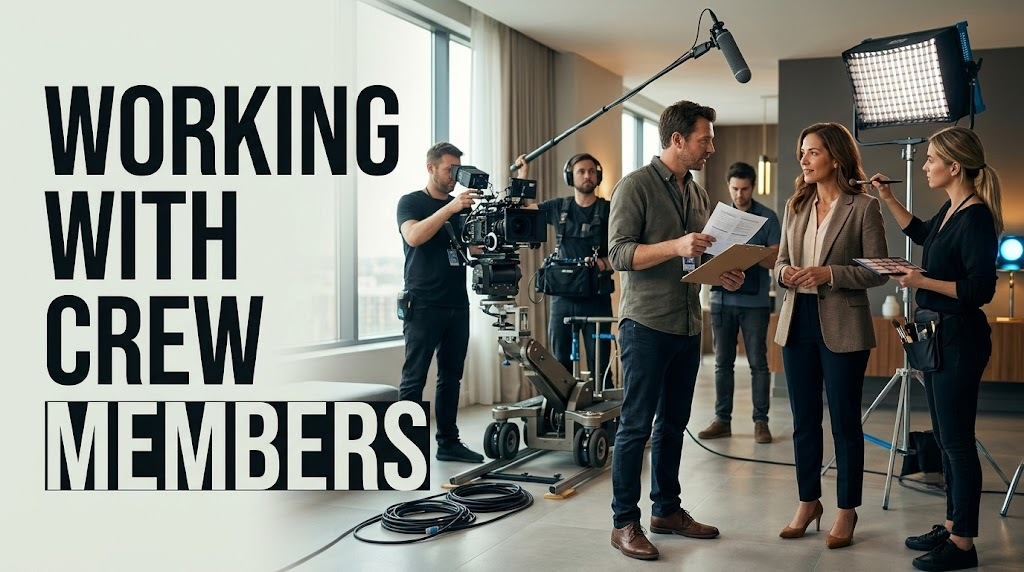
Every film and television production depends on teamwork.
While actors are the faces audiences see on screen, dozens—or sometimes hundreds—of professionals work behind the scenes to bring every story to life.
Learning how to work respectfully with crew members helps productions operate smoothly and creates a more positive experience for everyone involved.
Understanding what different departments do can also help actors communicate more effectively throughout the filming process.
In this guide, we'll introduce the crew members you'll commonly encounter on set and explain how professional collaboration benefits every production.
Every Department Has an Important Role
Film and television productions are made possible through the combined efforts of many specialized departments.
Each crew member contributes unique knowledge and skills that support the finished production.
Although actors may interact with some departments more frequently than others, every role helps keep the production moving efficiently and safely.
Understanding this collaborative environment helps actors become stronger members of the production team.
The People You'll Meet on Set
Depending on the production, actors commonly work alongside professionals such as:
- Assistant directors.
- Camera operators.
- Directors of photography.
- Gaffers and lighting technicians.
- Sound mixers and boom operators.
- Hair and makeup artists.
- Costume department staff.
- Script supervisors.
- Production assistants.
Each department focuses on a different aspect of the production while working toward the same creative goal.
Respect Supports Better Collaboration
Professional relationships are built through respect.
Simple habits can make a positive difference, including:
- Arriving prepared.
- Following instructions.
- Respecting equipment and work areas.
- Communicating politely.
- Being patient during technical adjustments.
- Appreciating the work of every department.
A respectful attitude contributes to a productive and positive set environment.
Filmmaking Is a Team Effort
Although actors perform in front of the camera, every scene depends on collaboration behind it.
Lighting crews prepare the scene.
Camera teams capture the performance.
Sound departments record dialogue.
Hair, makeup, and wardrobe help maintain continuity.
Together, every department contributes to the final production audiences see on screen.
Good Communication Benefits Everyone
Clear communication helps productions stay organized.
When working with crew members:
- Listen carefully.
- Ask questions respectfully when appropriate.
- Follow production procedures.
- Notify the appropriate department if an issue arises.
- Remain flexible as production needs change.
Professional communication helps every department work efficiently throughout the day.
Common Misconceptions About Working With Crew Members
Actors who are new to professional productions sometimes misunderstand the role crew members play on set.
Here are a few common misconceptions.
Crew Members Only Handle Technical Tasks
While many crew positions involve technical expertise, every department contributes to the storytelling process.
Camera, lighting, sound, wardrobe, hair and makeup, and many other departments all help support the performances audiences ultimately see on screen.
Their work directly contributes to the quality of the finished production.
Actors Only Need to Communicate With the Director
Actors interact with many members of the production team throughout the filming day.
Depending on the situation, you may receive instructions from:
- Assistant directors.
- Hair and makeup artists.
- Costume department staff.
- Production assistants.
- Script supervisors.
- Camera crew members.
Understanding who to communicate with helps production run smoothly and efficiently.
Every Crew Department Works Independently
Although each department has specialized responsibilities, filmmaking is highly collaborative.
Crew members constantly coordinate with one another to prepare each scene, solve challenges, and maintain the production schedule.
Successful productions rely on teamwork across every department.
Professionalism Only Matters During Filming
Professionalism is important throughout the entire production day.
Whether you're waiting in holding, preparing in wardrobe, rehearsing a scene, or filming, respectful behavior helps create a positive environment for everyone.
Consistent professionalism contributes to strong working relationships and an efficient production.
Building Strong Working Relationships
Positive relationships with crew members develop through everyday professional habits.
Actors can build trust by:
- Being punctual.
- Following instructions carefully.
- Treating everyone respectfully.
- Remaining patient during technical setups.
- Expressing appreciation for the work of others.
- Maintaining a positive attitude throughout the day.
Small actions often leave lasting impressions.
Everyone Contributes to the Final Story
When audiences watch a finished film or television episode, they see the combined work of many talented professionals.
Every department contributes to creating believable characters, compelling visuals, and immersive storytelling.
Recognizing the value of every crew member encourages a collaborative mindset and strengthens the production as a whole.
Frequently Asked Questions
Should I introduce myself to crew members?
When appropriate, a friendly and professional introduction can help build positive working relationships.
At the same time, be mindful that crew members are often focused on preparing for filming, so choose moments that don't interrupt their work.
Who should I ask if I have a question on set?
That depends on the situation.
Production assistants, assistant directors, or the appropriate department representative can often help direct your question or connect you with the right person.
Is it okay to thank crew members?
Absolutely.
Simple expressions of appreciation and respectful communication contribute to a positive working environment.
Professional courtesy is valued across every department.
Why do actors spend time waiting while the crew works?
Preparing a scene often involves camera setup, lighting adjustments, sound checks, and many other technical tasks before filming can begin.
Patience during these preparations allows every department to do its work safely and effectively.
Your Next Steps
Understanding how crew members contribute to a production helps actors become stronger collaborators on set.
As you continue building your career:
- Respect every department.
- Communicate professionally.
- Stay patient during production.
- Follow instructions carefully.
- Appreciate the teamwork that brings every story to life.
The strongest productions are built on collaboration, and every positive interaction helps create an environment where cast and crew can do their best work together.