What Is Blocking in Film and Television?
Learn what blocking means in film and television, why it's important, and how planned movement helps actors, directors, and crew create effective scenes.
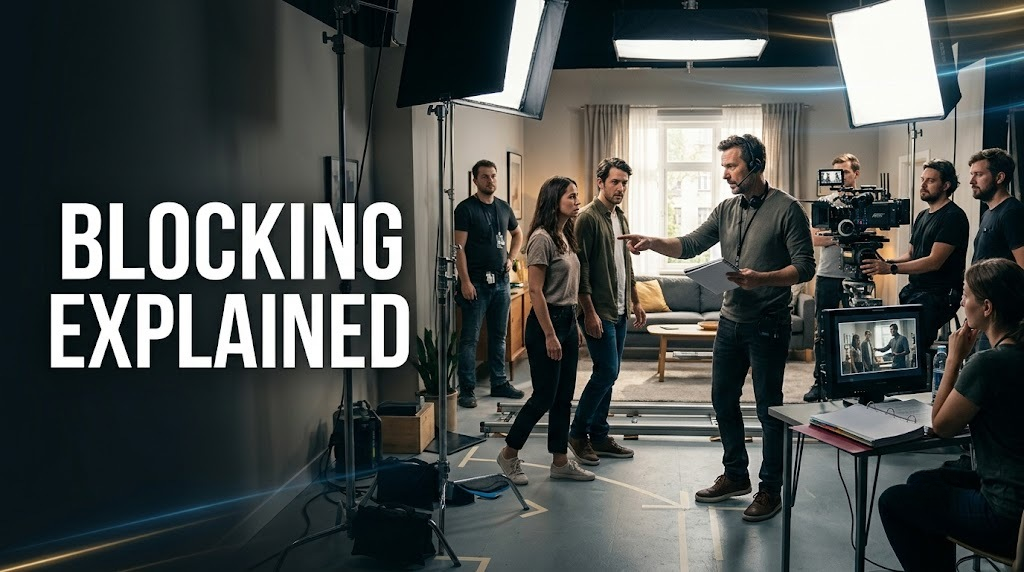
Before a scene is filmed, actors rarely begin performing immediately.
Instead, the production team usually spends time planning where performers move, where cameras are positioned, and how each shot will unfold.
This planning process is called blocking.
Understanding blocking helps actors move confidently during rehearsals, work more effectively with directors and crew members, and support both the storytelling and technical needs of a production.
In this guide, you'll learn what blocking is, why productions use it, and how actors can approach it professionally.
Planning Movement Before Filming
Blocking is the process of planning where actors move and position themselves during a scene.
These movements are developed before filming so that performances, camera positions, lighting, and other technical elements work together effectively.
Blocking may include:
- Entering or exiting a room.
- Walking to a specific location.
- Sitting or standing.
- Interacting with props.
- Moving around other performers.
The exact movements depend on the needs of the story and the production.
Supporting Both Story and Camera
Blocking isn't only about where actors stand.
Every movement is designed to support multiple parts of the production, including:
- Storytelling.
- Camera framing.
- Lighting.
- Sound recording.
- Safety.
- Continuity.
When everyone follows the planned movement, the production can film scenes more efficiently while maintaining consistency between takes.
Collaboration During Rehearsals
Blocking is usually developed through collaboration.
Depending on the production, actors may work with:
- Directors.
- Assistant directors.
- Camera operators.
- Directors of photography.
- Script supervisors.
As scenes are rehearsed, small adjustments may be made to improve performances or accommodate technical requirements.
Remaining flexible is an important part of the process.
Small Changes Can Affect Many Departments
Even a small adjustment to an actor's movement can influence several departments.
Changing where you stand or when you move may affect:
- Camera angles.
- Lighting placement.
- Microphone positioning.
- Focus.
- Continuity between takes.
This is one reason productions often ask actors to maintain consistent movement once blocking has been established.
Preparation Makes Blocking Easier
Actors who arrive prepared can usually focus more fully on blocking rehearsals.
Knowing your dialogue, understanding the scene, and being ready to collaborate allows you to concentrate on refining movement rather than learning basic performance details.
Preparation creates more time for creative exploration during rehearsals.
Common Misconceptions About Blocking
Actors who are new to professional productions sometimes misunderstand the purpose of blocking.
Here are a few common misconceptions.
Blocking Limits Your Performance
Not at all.
Blocking provides a structure that allows actors to perform consistently while supporting the technical requirements of filming.
Within that structure, actors still bring emotion, character choices, and authenticity to every scene.
Once Blocking Is Set, It Never Changes
Blocking often evolves during rehearsals.
Directors and crew members may adjust movement to improve storytelling, camera composition, lighting, or pacing.
Changes are a normal part of the creative process.
Blocking Is Only Important for the Camera
Camera placement is one reason blocking matters, but it's not the only one.
Planned movement also helps support:
- Lighting setups.
- Sound recording.
- Actor safety.
- Continuity between takes.
- Overall production efficiency.
Blocking allows multiple departments to coordinate their work successfully.
Memorizing Lines Is More Important Than Movement
Dialogue and movement work together.
Knowing your lines is essential, but understanding when and where to move helps create a believable, consistent performance that supports the scene.
Preparation includes both.
Consistency Builds Better Scenes
Once blocking has been established, productions often ask actors to repeat their movements consistently.
Consistency helps ensure:
- Camera framing remains accurate.
- Lighting stays consistent.
- Sound equipment captures dialogue effectively.
- Continuity is maintained between takes.
- Editors have matching footage during post-production.
Repeating movement reliably helps every department do its job.
Stay Flexible During Rehearsals
Blocking rehearsals are collaborative.
As scenes develop, directors may discover new creative ideas or technical adjustments that improve the final result.
Actors who remain adaptable can respond confidently when movement changes are introduced.
Being open to adjustments is an important part of professional filmmaking.
Frequently Asked Questions
Will someone show me where to move?
Yes.
During blocking rehearsals, the director or another member of the production team will explain where actors should move throughout the scene.
If you are unsure about your movement, politely ask for clarification before filming begins.
Can blocking change during filming?
Yes.
Although productions aim for consistency, adjustments may be made if creative or technical needs change.
Actors should remain attentive and follow updated direction when necessary.
What if I accidentally miss my blocking?
Mistakes happen.
If something goes differently than planned, remain professional and follow the director's guidance.
The production team will determine whether another take is needed.
Do actors memorize blocking?
Over time, yes.
As scenes are rehearsed and filmed, actors naturally become familiar with both their dialogue and their planned movements.
Repeating blocking consistently helps create smooth performances throughout production.
Your Next Steps
Understanding blocking helps you work more confidently during rehearsals and filming.
As you continue gaining experience:
- Listen carefully during blocking rehearsals.
- Learn both your dialogue and your movement.
- Stay consistent between takes.
- Remain flexible when adjustments are made.
- Collaborate with directors and crew members throughout the process.
Blocking isn't simply about where you stand—it's one of the ways acting, cinematography, lighting, sound, and storytelling come together to create a successful scene.